The Rodeo Wars: Inside the Fight to Ban America's Oldest Western Sport
The campaigns to ban rodeo keep losing, and none of them is finished. California has required rodeo injury reports since 2000; in 2018-19 the state received seven.
Her name was +H6 Cow Palace, and she was a bucking horse. She belonged to Lone Oak Western Productions, a family company that breeds rodeo stock, and she shared her name with the Daly City arena that has staged the Grand National Rodeo since 1941. On a Friday night, Aug. 8, 2025, during a performance at the Gilroy Rodeo, she broke her neck and died. The rodeo went on (Morgan Hill Times).
What came next is what this article is about. Since 2000, California law has required the veterinarian at every rodeo to send the state Veterinary Medical Board a written list of any animal injury that needed treatment, within 48 hours of the last performance (Penal Code 596.7). No report was filed. The rodeo's president, Erik Martin, wrote that the death was instantaneous and that "no treatment was able to be rendered," so the law did not apply. An eyewitness, who was not named, disputed that and told the paper a veterinarian had reached the mare quickly and treated her. Eric Mills of Action for Animals, who helped pass the law in 1999, challenged the rodeo's account (Morgan Hill Times). Read the way the rodeo read it, the statute counts a horse that is hurt and can leave out a horse that is killed.
In the 15 months since, the argument over whether rodeo should exist at all has played out in council chambers. In Los Angeles, a draft ordinance outlawing bull riding, bronc riding, calf roping, steer wrestling and team roping inside city limits expired on July 18 after two years in committee, six weeks after rodeo supporters and animal advocates crowded into City Hall to fight over it on a day it was not even on the agenda (Los Angeles City Clerk; Governing). On Nov. 17, the City Council in Worcester, Mass., voted 8 to 3 to file an ordinance that would have barred flank straps and electric prods, after the city manager warned that it would effectively end rodeo in a city whose arena hosted Professional Bull Riders events from 2001 to 2025 (MassLive, via Yahoo).
San Diego's proposed ban stalled, and a judge there has since ordered changes to its rodeo (Times of San Diego). In Oregon, an initiative to strip rodeo, ranching, hunting and fishing from the exemptions in the state's animal cruelty law fell 12,911 valid signatures short of the ballot in July, on its backers' third try (Capital Press). Every one of these campaigns lost. None of them is finished: advocates in Los Angeles have called on the council to start over (Last Chance for Animals).
This is how the country now argues about rodeo: one city at a time, and now and then one state, with cellphone video on one side and economic impact studies on the other. Almost never in the room is the one thing that could settle part of the argument, an honest count of how often rodeo animals are hurt and killed. California wrote a law to collect that count a quarter century ago and gave the job to a board that says it has no role in enforcing it. In the 2018-19 fiscal year, the board received seven reports from the entire state (Veterinary Medical Board).
This article looks at the bans, the people fighting over them and the record, and it makes an argument. The answer to bad practice in rodeo is a standard that is written down, enforced and measured, not a ban. License the people who supply the animals. Count every run, every injury and every death. Publish the numbers. Shut down the contractors and the events that fail, and keep the arena open for the ones that pass.
I have a stake in the argument and should state it. I co-own Ocean View Stables in Daly City, Calif., the same city as the Cow Palace, where we take the public on guided beach rides, teach riding lessons and give pony rides. The state commission I propose later in this article would license and count my business along with every rodeo in California.
A sport born from a job
Rodeo is the rare American sport that grew straight out of a job. The work came first: Spanish and Mexican vaqueros gathering, roping and doctoring cattle on open range, skills that moved north into Texas and California before either was a state. The word itself is Spanish for roundup (Britannica).
The contests began when hands from rival outfits argued over who was best. On July 4, 1883, in Pecos, Texas, a cattle driver named Trav Windham and a roper named Morg Livingston settled one such argument in public, and historians generally credit Pecos with the first contest to offer prizes. Prescott, in Arizona Territory, added the rest of the modern formula on July 4, 1888: advertising, paid admission and a trophy, which went to a cowboy named Juan Leivas. Cheyenne Frontier Days followed in 1897, the Pendleton Round-Up in 1910 and the Calgary Stampede in 1912 (Oklahoma Historical Society; Richard Slatta, N.C. State).
The sport never belonged to one group. Bill Pickett, a Black cowboy from Texas, invented steer wrestling and made it famous at Cheyenne in 1904 (Bill Pickett Invitational Rodeo). The Mexican roper Vicente Oropeza was one of the arena's first stars, and Native bronc riders such as Jackson Sundown and Tom Three Persons won on its biggest stages. Charrería, the older Mexican cousin of American rodeo, is Mexico's national sport, and in 2016 UNESCO added it to its list of the intangible cultural heritage of humanity (UNESCO).
California's rodeos are nearly as old as the sport. Livermore held its first in 1918 to raise the town's $1,200 share of a wartime Red Cross assessment and has billed itself as the world's fastest rodeo since 1935 (Livermore Rodeo; ProRodeo Hall of Fame). The Rowell Ranch Rodeo in Castro Valley held its 100th in May 2022 (Drovers). The Cow Palace itself was built for a rodeo: the first Grand National Livestock Exposition, Horse Show and Rodeo opened there in November 1941, and after the Army used the building as a repair garage during World War II, the show came back in 1946 (Cow Palace). The ProRodeo Hall of Fame inducted the Grand National in 2008 (ProRodeo Hall of Fame).
Cowboys organized in 1936 into the group that became the Professional Rodeo Cowboys Association, which sanctions hundreds of rodeos a year and writes the welfare rules they follow. Rodeo is the official state sport of Wyoming, South Dakota and Texas. Its championship, the National Finals Rodeo, drew 175,846 people to Las Vegas over 10 nights in 2025 (Las Vegas Review-Journal).
Where the bans stand
The recent proposals failed. Older ones did not, and several were written so that the word ban never appears: they outlaw the equipment, and the event leaves on its own. These are the bans and proposals this reporting found.
| Place | Status | What it does |
|---|---|---|
| Los Angeles | Expired July 18, 2026, with no final vote (City Clerk) | The draft would have banned bull riding, bronc riding, calf roping, steer wrestling and team roping citywide. Charrería, escaramuza and Native American events were exempt only if they left those events out. Advocates want it reintroduced. |
| Worcester, Mass. | Filed, 8 to 3, on Nov. 17, 2026 (MassLive) | Would have barred flank straps and electric prods at rodeos on city property, with a $300 fine per offense (WROR). |
| San Diego | Proposed 2024, stalled (NBC San Diego) | Councilmember Kent Lee proposed a ban after the first Petco Park rodeo; a scaled-back version also stalled. A judge ordered changes to the rodeo in January 2026. |
| Oregon (statewide) | Failed to qualify, July 2026 (Capital Press) | Initiative Petition 28 would have removed cruelty-law exemptions for rodeo, ranching, hunting and fishing. It drew 104,262 valid signatures of 117,173 needed. |
| Alameda County, Calif. | In force since 2022 (CBS News Bay Area) | Bans wild cow milking in unincorporated areas, after a 2019 ban on mutton busting. A proposed ban on spurs, flank straps and non-release ropes was dropped. |
| San Francisco | In force since 2000 (S.F. Police Code) | Rodeos need a city permit and a veterinarian. Only "humane rodeo events" are allowed, and cattle prods and unlined flank straps are barred. |
| Irvine, Calif. | In force since 2011 | Outright ban on rodeos on public or private property. |
| Pasadena, Calif. | In force | Counted as a full ban: a 2015 law on animal displays on public property covers rodeos. |
| Chino Hills and Laguna Woods, Calif. | In force | Listed as outright bans by Michigan State's animal law center. |
| Napa County, Calif. | In force | Restrictions that ban sponsors cite as a prohibition. |
| Pittsburgh | In force | Bans electric prods, flank straps, wire tie-downs and sharpened spurs, which ends professional rodeo in practice. |
| Fort Wayne, Ind.; St. Petersburg, Fla.; Leesburg, Va.; Southampton, N.Y.; Baltimore County, Md. | In force | Bans or equipment limits cited by sponsors of newer ordinances. |
| Rhode Island | State law | Bans tie-down calf roping and allows breakaway roping and most other events. A veterinarian is required. |
| California | State law since 2000 | A veterinarian on site or on call at every rodeo and charreada, limits on electric prods, and injury reports to the state within 48 hours. |
| Thirteen states | State law | Ban horse tripping. |
The older bans in the table come from Michigan State University's Animal Legal and Historical Center and from the lists that sponsors of new bans cite, and they are labeled that way (Animal Legal and Historical Center; office of Councilmember Bob Blumenfield). The professional rodeo association listed fighting the Los Angeles and San Diego bans among its priorities for 2025 (PRCA). It expects more of them, and so do the people writing them.
The voices on both sides
The Los Angeles campaign began in 2020, when the city's animal services commissioners asked the council to prohibit rodeo events (Animal Legal Defense Fund). In February 2021 the council voted 15 to 0 to seek a ban on electric prods, flank straps, wire tie-downs and sharpened or fixed spurs (PBS SoCal), and Last Chance for Animals, the Los Angeles group behind the push, put up billboards across the city urging residents to back it (Washington Times). In December 2023, with Councilmember Bob Blumenfield leading, the council voted 14 to 0 for a broader draft that would outlaw the main rodeo events themselves (NBC Los Angeles).
The case against rodeo rests on pain and consent. Advocates say the flank strap is cinched around a bucking animal's flanks to provoke it, and the MSPCA-Angell in Massachusetts argues that the strap can make a bull or horse buck hard enough to break bones (MassLive). They say a calf roped at a run cannot be protected by any rule, and that tradition is no defense of cruelty. Jane Velez-Mitchell, a former KCAL television reporter and animal advocate, turned the cultural argument around at City Hall in June: "Torturing animals in rodeos is not a celebration of Latino culture" (Governing). In Worcester, Councilor Khrystian King, who had asked for the ordinance, told colleagues they had a responsibility to "consider the welfare and safety of everyone involved, including the animals" (MassLive). In Alameda County, Supervisor Richard Valle, who wrote the 2022 compromise that banned wild cow milking and left the rest of the rodeo alone, made the advocates' point in four words: "Who speaks for them?" (CBS News Bay Area).
Rodeo's defenders answer on welfare, culture and money. On welfare, they point to the rulebook and the veterinarians who enforce it. Dr. Douglas Corey, the Oregon veterinarian who has shaped the professional association's livestock rules for more than 30 years, told the American Association of Equine Practitioners in 2020 that five years of data showed about one injury per 1,000 animal runs. "Livestock is the lifeblood of rodeo," he said (The Horse). In Worcester, Councilor Tony Economou cited a former bull rider to argue that the flank strap causes no pain (MassLive). In Los Angeles, the city's own Equine Advisory Committee, a panel created to advise the council on horses, told it in 2022 that "the positive aspects of rodeo outweigh the negative" and urged it to reject the ban (LAEAC letter).
The cultural argument has been loudest in Los Angeles. When the council voted in December 2023, charros, vaqueros, escaramuzas and members of the Compton Cowboys rode to City Hall on horseback to oppose it (ABC7). Councilwoman Monica Rodriguez, whose northeast San Fernando Valley district is home to many of the city's Latino and equestrian families, wrote amendments to protect charrería, escaramuza and Native rodeo, and in June she criticized an advocate for invoking fear of federal immigration enforcement to argue for the ban (San Fernando Valley Sun). In San Diego, Ramon Jara, the captain of a South Bay charro team, wrote that a ban would take an important part of Mexican heritage from his team and the generations behind it (Voice of San Diego). In Alameda County, Brian Morrison, a longtime rancher, told the Mercury News that "our lifestyles are important, cultures are important" (Drovers).
Then there is the money. Worcester's city manager, Eric D. Batista, warned that losing rodeo would cost the city parking revenue, restaurant traffic and hotel stays. Councilor Kathleen Toomey said she could not vote to end professional bull riding in the city, and Councilor Morris Bergman said he might have backed the same rules statewide, but not for Worcester alone (MassLive). Bergman's objection was to scope, not substance, and it points toward the answer this article proposes: one standard, set and enforced by the state. The largest rodeos are civic institutions. Houston's drew 2,735,695 people in 2025 and committed more than $28 million that year to scholarships, junior exhibitors and education grants (Houston Livestock Show and Rodeo), and California Rodeo Salinas, the state's largest, gave more than $770,000 to local nonprofits, according to East County Magazine (East County Magazine). Sean Gleason, the chief executive of Professional Bull Riders, has said its events showcase "animal care, cowboy values and an inclusive Western heritage" (Washington Times).
Veterinarians are on both sides as well. Dr. Peggy Larson, a veterinarian, lawyer and former bareback bronc rider, has written for years that rodeo is inherently cruel to animals (Monterey County Now), and she testified as an expert witness against the San Diego rodeo this year (East County Magazine).
The numbers nobody collects
California tried to answer the argument with data before most of today's fights began. Penal Code 596.7 requires a veterinarian on site or on call at every rodeo, a vehicle on hand for injured animals, limits on electric prods and the 48-hour injury list, and a companion statute requires the Veterinary Medical Board to post a standard form for the reports (Penal Code 596.7; Business and Professions Code 4830.8). A first violation can bring a fine of $500 to $2,000 (Morgan Hill Times).
What actually came in is in the board's own files. In January 2020, after Steve Hindi of the advocacy group SHARK raised the issue at a board meeting, the board's executive officer, Jessica Sieferman, summarized four and a half years of reports: 46 in all, listing 60 animal injuries, for the entire state (Veterinary Medical Board).
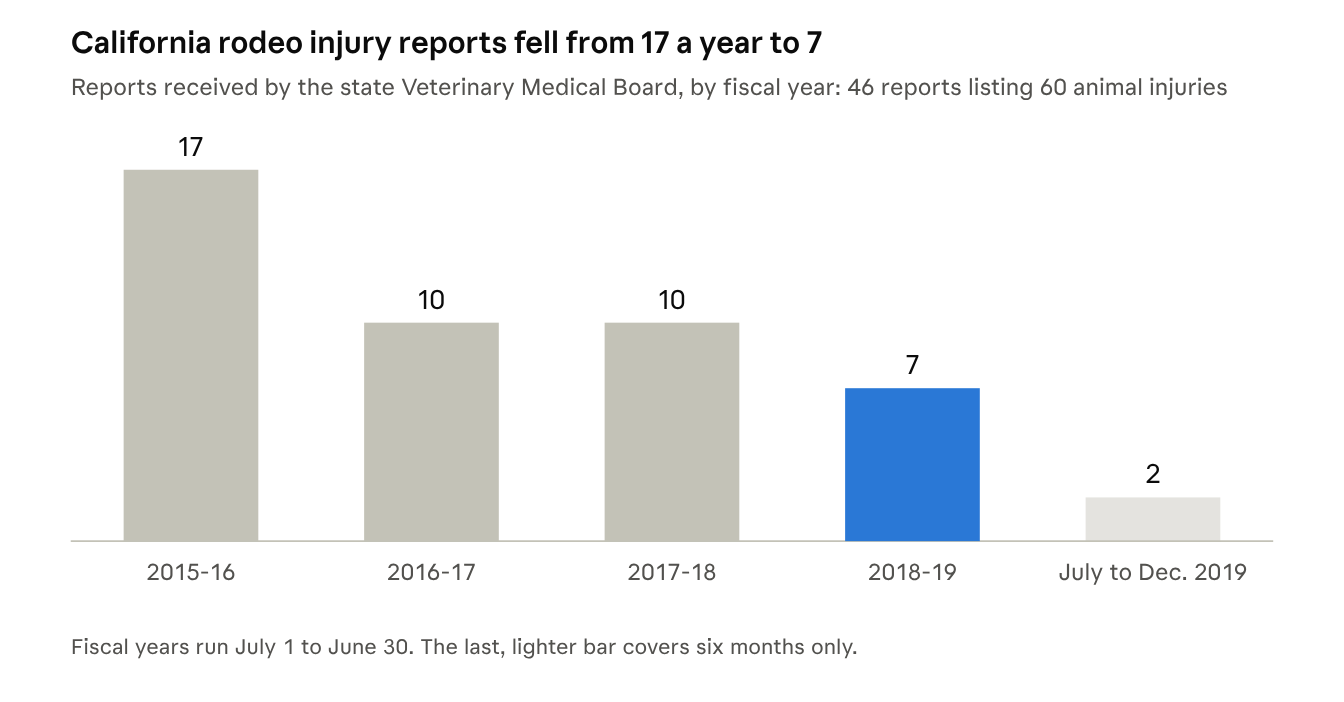
The same memo spelled out the board's limits. The board, it said, "does not enforce or hold any role in issuing penalties" under the rodeo law. That job belongs to the cities and counties where rodeos are held. The agency that receives the reports cannot penalize anyone who fails to file them.
A fuller count makes the same point. In 2022 the Los Angeles Times obtained 21 years of the reports through a public records request and found more than 125, describing injuries that ranged from scrapes to broken legs, backs and skulls. In 35 of them the animal died within minutes or was euthanized. Only 20 of the reports dated from before 2010 (Los Angeles Times, via Everand; One Green Planet).
Advocates say even that is a fraction of the truth. In 2014 SHARK, represented by the Animal Legal Defense Fund, sued California Rodeo Salinas and its head veterinarian, alleging that the rodeo had reported 4 of the 41 injuries the group filmed there over two years (Animal Legal Defense Fund). The rodeo answered that "animal extremist groups" were exaggerating in order to end the sport (Courthouse News).
The sport's own numbers point the other way. Veterinary surveys at sanctioned professional rodeos counted 16 injured animals in 33,991 runs in the 1993-94 season and 38 in 71,743 in 2000, roughly five per 10,000 runs (AABP proceedings; National Animal Interest Alliance). Corey's later data put the rate at about one per 1,000 across some 355,000 runs a year (The Horse), and association officials cite a 99.9 percent safety rate (East County Magazine). Those are low rates. They also come from the top tier of sanctioned events, collected by the people being judged, and the sport should stop asking the public to take them on trust.
The clearest test of the evidence so far came in a San Diego courtroom. The San Diego Rodeo at Petco Park, produced by C5 Rodeo Co. with the Padres and not sanctioned by the professional association, has drawn sold-out crowds (Times of San Diego). At the first one, in 2024, a 6-year-old Thoroughbred named Waco Kid crashed into a barricade. Organizers said an initial exam found no obvious sign of fracture; discovery in the animal groups' lawsuit later showed that no X-rays had been taken (Sandiegoville). In 2025 a 17-year-old mare named Pearl Necklace competed in saddle bronc while heavily pregnant and died afterward of a ruptured uterine artery. The San Diego Humane Society said it could not prove that the rodeo caused her death (NBC San Diego).
After a weeklong civil trial in January, Judge Joel R. Wohlfeil of San Diego Superior Court found that competing a pregnant mare, 10 to 11 months along, was "needless suffering" and unnecessary cruelty, and that the statement about Waco Kid was false. He moved toward a permanent injunction that requires comprehensive diagnostic equipment, X-ray included, on the grounds and keeps pregnant mares out of competition. He did not ban the rodeo, and the order covers only that event (East County Magazine).
Both halves of that case matter here. The rodeo's critics proved specific bad practices in open court, with evidence. And the remedy went after the practices rather than the sport: an X-ray machine and a rule about pregnant mares, not an empty arena.
Where California already drew its lines
The Bay Area is a good place to test the question, because its cities and counties have between them tried most of the answers short of a ban.
San Francisco settled its version in 2000. The city's ordinance requires anyone staging a rodeo there to get a permit, now issued by the Entertainment Commission, and to pay for a veterinarian who may examine any animal at any time without notice. It limits rodeos to humane events and bars greased pig contests, cattle prods and flank straps without a fleece or sheepskin lining (S.F. Police Code; 2000 ordinance). The city regulated; it did not ban. The Grand National was never within the ordinance's reach in any case: the Cow Palace sits just south of the city line, in Daly City.
Alameda County took a narrower path. Its supervisors banned mutton busting, in which children ride sheep, in 2019 (CBS News Bay Area). In 2022 they took up a broader ordinance that would also have banned spurs, flank straps, tie-down calf roping and wild cow milking, an unsanctioned ranch event in which a team tries to milk a range cow turned loose in the arena (In Defense of Animals; DTN). The Rowell Ranch Rodeo, the only rodeo in the county's unincorporated area, joined the Livermore rodeo and the professional association to fight it, and more than 9,000 people signed a petition the Livermore rodeo circulated (Pleasanton Weekly; Livermore Rodeo). Valle's compromise, adopted in September and given final approval without dissent in October, banned wild cow milking and kept the spurs, straps and ropes. Supervisor David Haubert voted against even that in September, arguing that state and federal cruelty laws already applied (CBS News Bay Area; DTN; In Defense of Animals). Livermore, an incorporated city, was outside the ordinance's reach.
Los Angeles had a regulatory option before it chose a ban. In April 2022 its Equine Advisory Committee drafted an ordinance that would have required a permit for every rodeo, written lined, quick-release flank straps, rolling spurs, horn wraps and limits on prods into city law, and kept sore or injured animals out of the arena (LAEAC draft). It had no reporting requirement and no fines, which were its real weaknesses. The council moved toward a ban instead, and the ban expired this July.
Put the pieces side by side and California already owns most of a working system: a state law that puts a veterinarian at every rodeo, a city permit that lets that veterinarian examine any animal without notice, a county ban aimed at one unsanctioned event, an advisory committee's draft of equipment rules and a court order aimed at two bad practices. What it does not have is anyone whose job is to add up the results.
The strongest case for a ban, and its limits
Readers should hear the opposing case at full strength, because it is not a foolish one.
Opponents argue that consent is the whole question: a bronc rider chooses the risk and a calf does not, and entertainment is too thin a reason to impose it. They argue that some events, tie-down roping above all, cannot be made humane by any rule, and they point to Rhode Island, which banned it and kept the rest of the program (Animal Legal and Historical Center). They argue that the industry's injury figures come from the industry and cover only its best events. They argue that California has had a reporting law for a quarter century and the sport let it wither, so a promise of better reporting is worth little. And they argue that traditions end all the time when a society decides the cost is too high, so heritage alone has never been enough to defend a practice.
The commission proposed below will draw objections of its own. Humane groups will say a board with industry seats ends up working for the industry, and they can point to Ohio, where the state Farm Bureau was behind the livestock board that voters created in 2009 (Hobby Farms). Cities will say a state license that limits local bans takes away their right to decide what happens on their own property. Operators will call it one more fee and one more form. Taxpayers can fairly ask why the state needs a new body when the existing ones do not enforce the law already on the books.
I take two of those points most seriously. The reporting law did fail, and that failure belongs to the sport as much as to the state. And heritage is not a blank check; each generation that claims it has to earn it again.
But the ban argument has limits. Every ordinance proposed so far treats the worst afternoon at the worst-run event as the definition of the sport. A ban cannot tell a good stock contractor from a bad one. It closes the arena to both, usually in the cities with the most veterinarians, inspectors and cameras, and leaves the unsanctioned event in the next county as it was. The two worst cases in this article were each answered, or could have been, by something narrower than a ban: a court order for the pregnant mare in San Diego, and a one-line fix to the reporting law for the mare in Gilroy.
We do not hold other dangerous pursuits to the ban standard. The U.S. Parachute Association publishes deaths per jump: 16 in 2025, across roughly 3.47 million jumps (U.S. Parachute Association). The Coast Guard counted 556 deaths in recreational boating in 2024, the fewest in more than 50 years of record-keeping (U.S. Coast Guard). American Whitewater receives reports of 30 to 40 deaths on moving water in a typical year (American Whitewater). Each of those activities answered its deaths with training, equipment standards, inspection and a public count, and none of them was outlawed. Racing did the same for its horses. Thoroughbred racing set up a national Equine Injury Database in 2009, when it recorded 2.00 racing deaths per 1,000 starts. In 2025 the figure was 1.07, the lowest it has recorded, and the tracks that publish their own numbers posted 0.95 against 1.14 at tracks that keep them private (Thoroughbred Daily News; Daily Racing Form). Nobody banned racing to get there.
The difference the critics point to is real. Skydivers and rafters choose their risk, and a steer does not. That is the strongest reason to measure the animal's risk independently and drive it down in public. It is not a reason to stop measuring.
What counting would look like
Counting is not hard for a business that wants to do it, and I can show it with my own. Our booking system shows that between May 1, 2025, and Nov. 18, 2026, Ocean View Stables put about 8,800 riders on horses: roughly 5,100 on guided beach rides, 3,400 in lessons and 270 on pony rides. In that time we recorded five incidents involving a rider on a guided ride, at least three of them falls, and one in which a visitor who was not riding was kicked. That is about one reported incident for every 1,000 beach riders. We recorded none in lessons. No one died. Our insurer has not paid a claim on any of them, and none has become a lawsuit.
A rodeo already holds the same kind of numbers. Every sanctioned rodeo knows its entries, its draw and its stock list, because that is how the prize money gets paid, and every stock contractor knows each animal he hauls. What is missing is a body that requires the count, audits it and publishes it: every run, every injury and every death, at every event, sanctioned or not, rodeo or charreada.
I propose that California, and any state having this fight, create a Large Animal Welfare Commission: a small licensing body, seated with veterinarians, working horsemen, operators, a humane organization and public members, covering rodeos and charreadas, carriage companies, rental strings and any other business that puts large animals in front of the public. The state already does this for racehorses. Since 1990 the California Horse Racing Board has required a necropsy on every horse that dies at a track or training center, through the state laboratory system at UC Davis, which credits the work with a significant role in a 50 percent drop in racehorse deaths (UC Davis). Ohio voters created a Livestock Care Standards Board with power to set civil penalties in 2009 (Ohio Revised Code), and Kentucky set up an Equine Health and Welfare Council in 2010 (Kentucky Revised Statutes). The first article in this series introduced the idea; here is its regulatory half in full.
What it covers. Horses, cattle and other large animals used in business in front of the public or in contact with it: rodeos and charreadas, carriage rides, rental and trail strings, pony rides, parades and exhibitions. Racing stays with the racing board. Ordinary ranching and farming stay where they are; this is about public events and public-facing businesses, not what a rancher does on his own ground.
Who sits on it. Nine members with fixed terms: an equine veterinarian, a food-animal veterinarian, a working horseman or trainer, a stock contractor or event producer, a public stable or carriage operator, a representative of a humane organization, a representative of the charro and cultural rodeo community, a local animal control or law enforcement officer, and a public member with an audit or data background. No one sector holds a majority.
What it does.
- Licenses operators and stock contractors, and can suspend them.
- Receives the reports: every run, ride and shift, and every injury and death, on one form within 48 hours. The rodeo reports California already requires move here from the veterinary board, which says it does not enforce them.
- Audits the count against entries, bookings and veterinary records, and fines anyone who does not file.
- Orders a necropsy on every animal that dies at a covered event, through the same state laboratory system that serves the racing board.
- Publishes rates every year, by activity, event and operator.
- Writes and updates standards by rule, from the data, in public meetings.
- Certifies horsemen and stockmen, and funds training.
Who pays. License fees, a small per-event or per-ticket fee, and fines. Ohio's board is carried inside its agriculture department's budget. This one should carry itself.
What a license is worth. This is the part cities will resist. A licensed operator in good standing should have a presumption of access: a city could still regulate routes, hours and venues, but could not ban a licensed activity outright without findings that the state standard has failed locally. That gives operators a reason to want the license, answers the Worcester councilor who said he might have supported the rules statewide, and gives a council something better to do with a bad video than vote on a whole industry.
Regulation is only half of what I have in mind for it. The same body should be the state's advocate for working horses: keeping an inventory of public land and concessions where a string could stand, writing the requests for proposals when a park's operator leaves, steering operators who meet the standard through the permit maze, and carrying the legislation the trade needs, starting with the equine activity liability statute that 48 states have and California does not (Equine Law Blog). The fourth article in this series, on public riding, sets out that half in full.
I co-own one of the businesses this commission would regulate. I would file the first report.
Regulate the stockman, keep the rodeo
A city or state that wants better treatment of rodeo animals has tools that work better than a ban. This is the standard I would put in front of any council, and most of it is already written down somewhere: in the professional rulebook, in San Francisco's permit, in Alameda County's ordinance, in a Los Angeles advisory committee's draft or in a San Diego judge's order.
- License the stock contractor. Anyone who supplies animals to a public event holds a state commission license that can be suspended or revoked.
- Put a veterinarian on the grounds, with authority and equipment. On site, not on call, at every performance, with the power to scratch any animal and to examine any animal without notice, as San Francisco's permit already allows. Large events keep X-ray and diagnostic equipment on site, as the San Diego court ordered. State law still lets an event rely on a veterinarian an hour away.
- Count the deaths. Every run and every injury is filed with the commission on one form within 48 hours, with a fine for not filing. An animal that dies in the arena is the first line on the form, not an exception to it.
- Publish the numbers. By event and by contractor, every year, so the public and the promoters can see who does this well.
- Write the equipment rules into law. Lined, quick-release flank straps, dull spurs with rowels that roll, and tight limits on electric prods already exist in professional practice and in the Los Angeles committee's 2022 draft. Make them bind everyone, instead of banning the tools.
- Protect the calf. Minimum weights, real penalties for jerking a calf over backward, and breakaway roping as the default for youth and amateur events.
- Protect the mare. No pregnant mares in competition, and a veterinary fitness check for older horses before they are entered.
- Limit the work, the haul and the exit. A cap on outs per animal per week and on hours in the trailer, logged for each animal, and a report on what happens to every animal that leaves a string.
- One rule for everyone, and an end to the events that cannot meet it. The same standard for the sanctioned rodeo, the amateur rodeo, the bull riding tour and the charreada. Where an event cannot be run to the standard, end that event, as Alameda County did with wild cow milking, and keep the rest of the program.
- Enforce, then open the door. Suspend the operators who fail. Give the ones who meet the standard access to public arenas and more dates, not fewer.
The building rodeo built
The Cow Palace still stands on Geneva Avenue, just over the San Francisco line, 85 years after it was built for a rodeo. This fall its schedule listed the Grand National for Oct. 9 and 10, produced by the Flying U Rodeo company, which has run the show for nearly six decades, and counted for a fifth year among the rodeos that raise money for children with cancer (Cow Palace).
The mare who carried the building's name is a better guide to what should happen next than any ordinance written so far. Her death in Gilroy was not a secret. A crowd saw it, a newspaper reported it and an advocate pressed the questions. What failed was the record. As the rodeo read the law, the state never had to hear about her, and if it had, it would have had nothing to compare her against: no count of runs that weekend, no rate for that arena or that contractor, no number for the sport.
A ban would not have fixed that. It would have moved the next rodeo somewhere with fewer cameras. A count would have put her in a public register beside every other run that weekend and every weekend after, and it would show whether that arena, that contractor or the sport as a whole has a problem worth fixing. If it does, the commission fixes it. If it does not, the count proves it.
Raise the standard. Count everything, the deaths first. Keep the rodeo.
How this article was reported
This article is based on public records and published reporting: Los Angeles City Council files and votes; council, county and court proceedings in Worcester, San Diego and Alameda County as reported by local news outlets; San Francisco's rodeo ordinance and the Los Angeles Equine Advisory Committee's draft; California statutes and the Veterinary Medical Board's own memo on rodeo injury reports; industry and advocacy statements; federal and industry safety statistics; and news coverage of the other places named. Quotations come from public statements, hearings, court rulings and published interviews, and each is linked to where it appeared. The author did not interview the people quoted. Lists of older bans come from an animal law center and from the sponsors of newer bans and are labeled that way. Ocean View Stables' figures come from the stable's own booking system and incident records.
Image credits
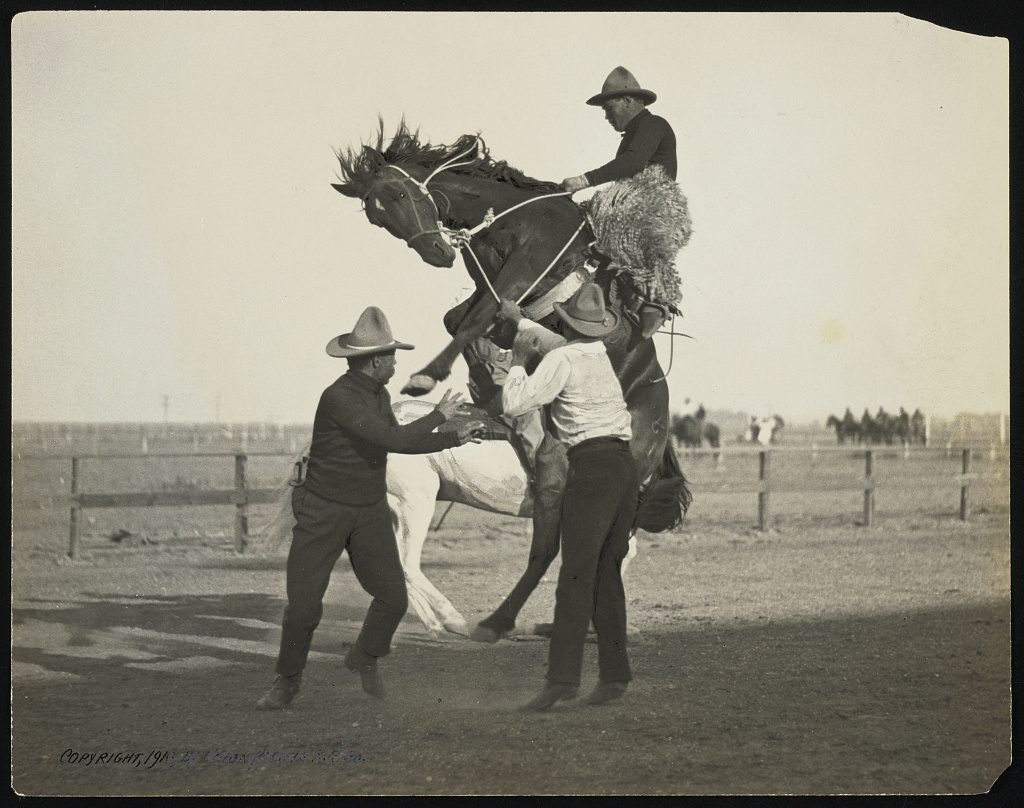
- "Jones on Silver City, Cheyenne Frontier Days," 1910. Union Pacific Railroad Co. Library of Congress, LC-DIG-ppmscd-03144.
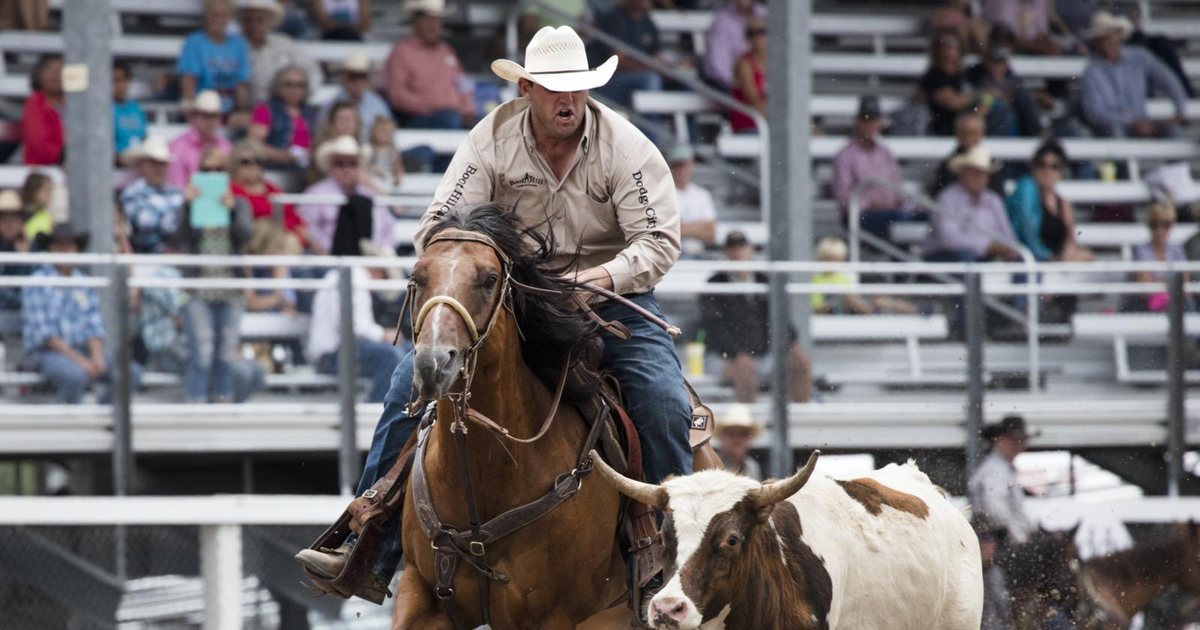
- Rodeo action at Cheyenne Frontier Days, 2015. Carol M. Highsmith. Library of Congress, LC-DIG-highsm-33410.
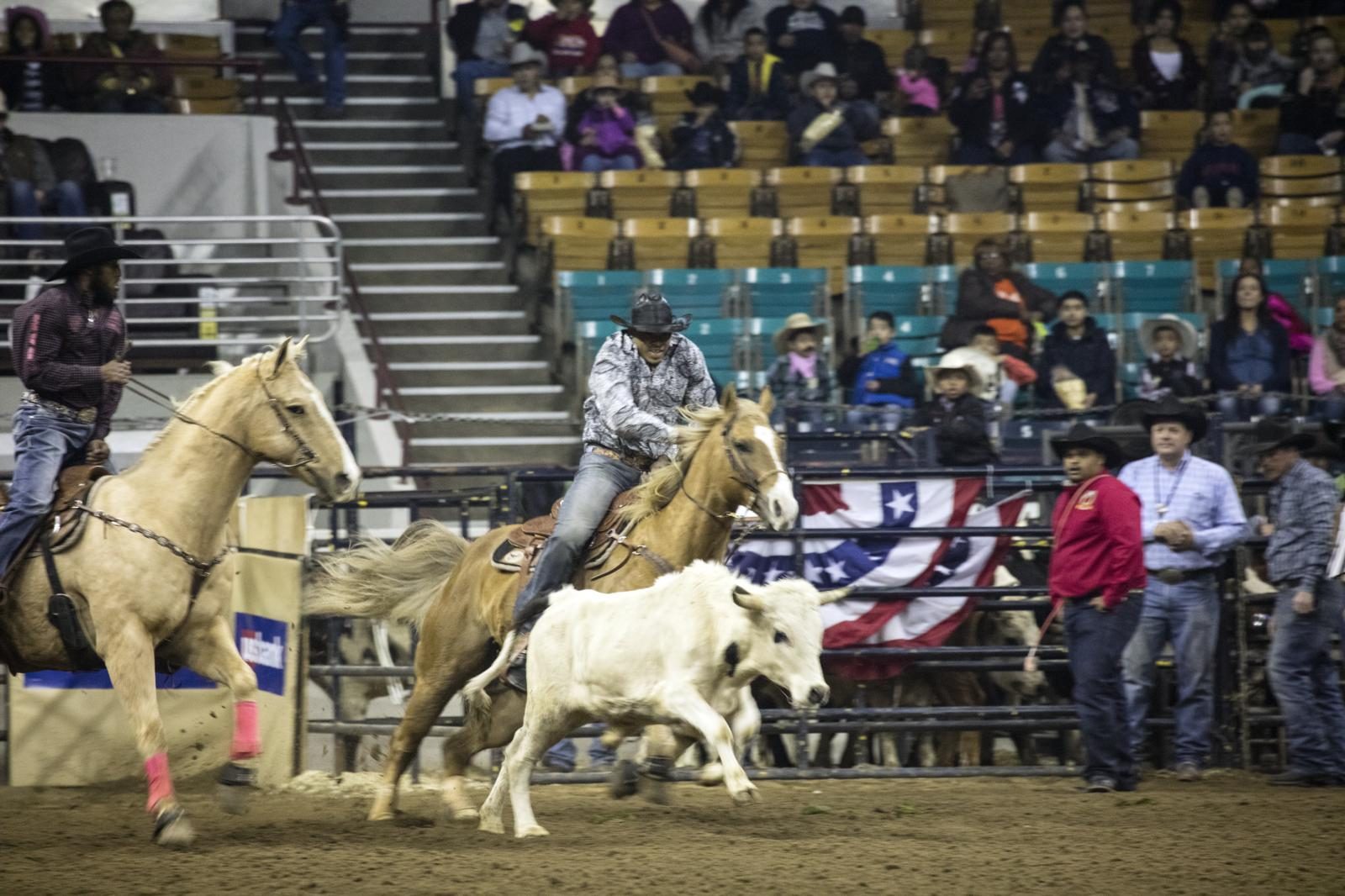
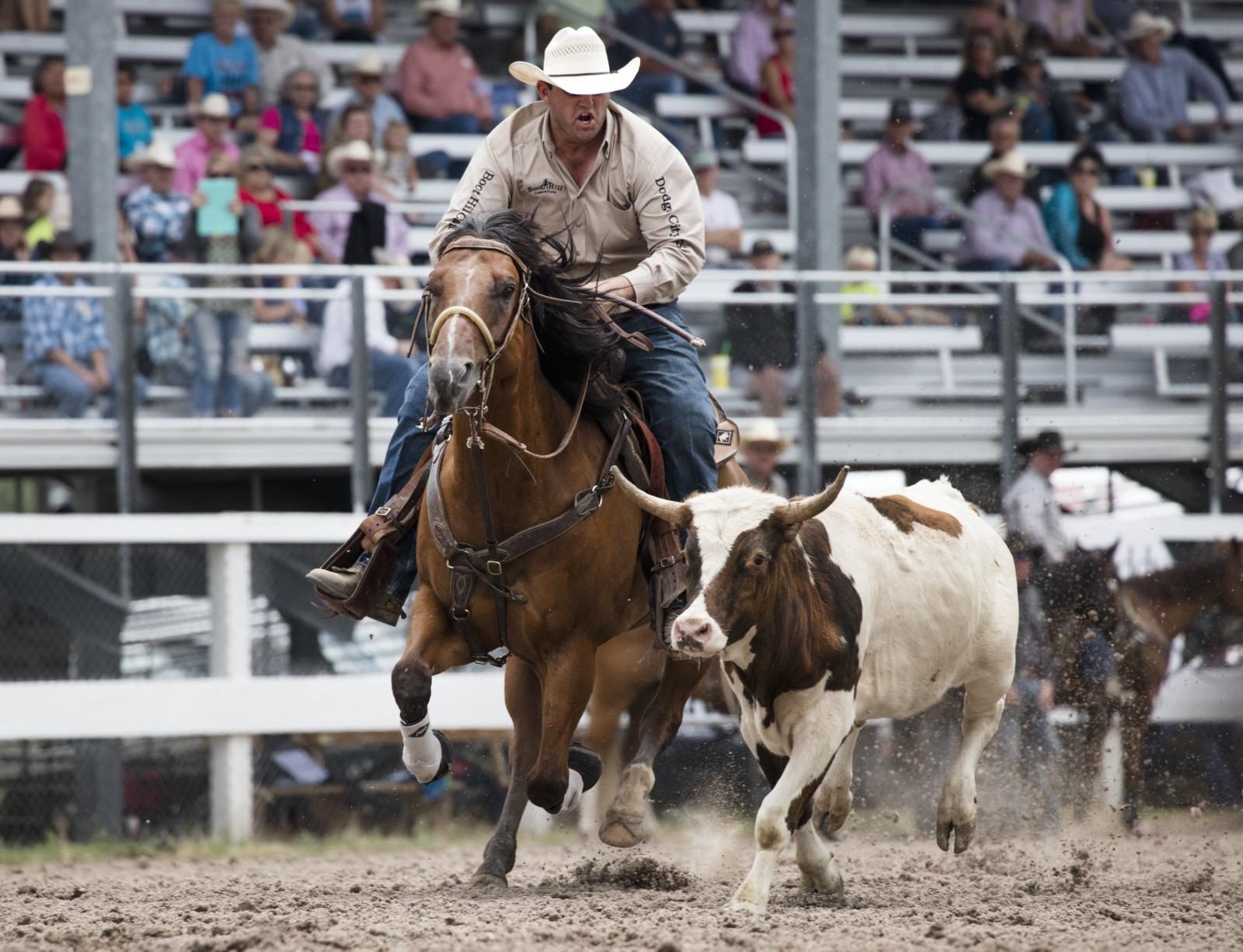
- Bull-dogging at the Martin Luther King, Jr., African-American Heritage Rodeo, Denver, 2016. Carol M. Highsmith. Library of Congress, LC-DIG-highsm-36248.
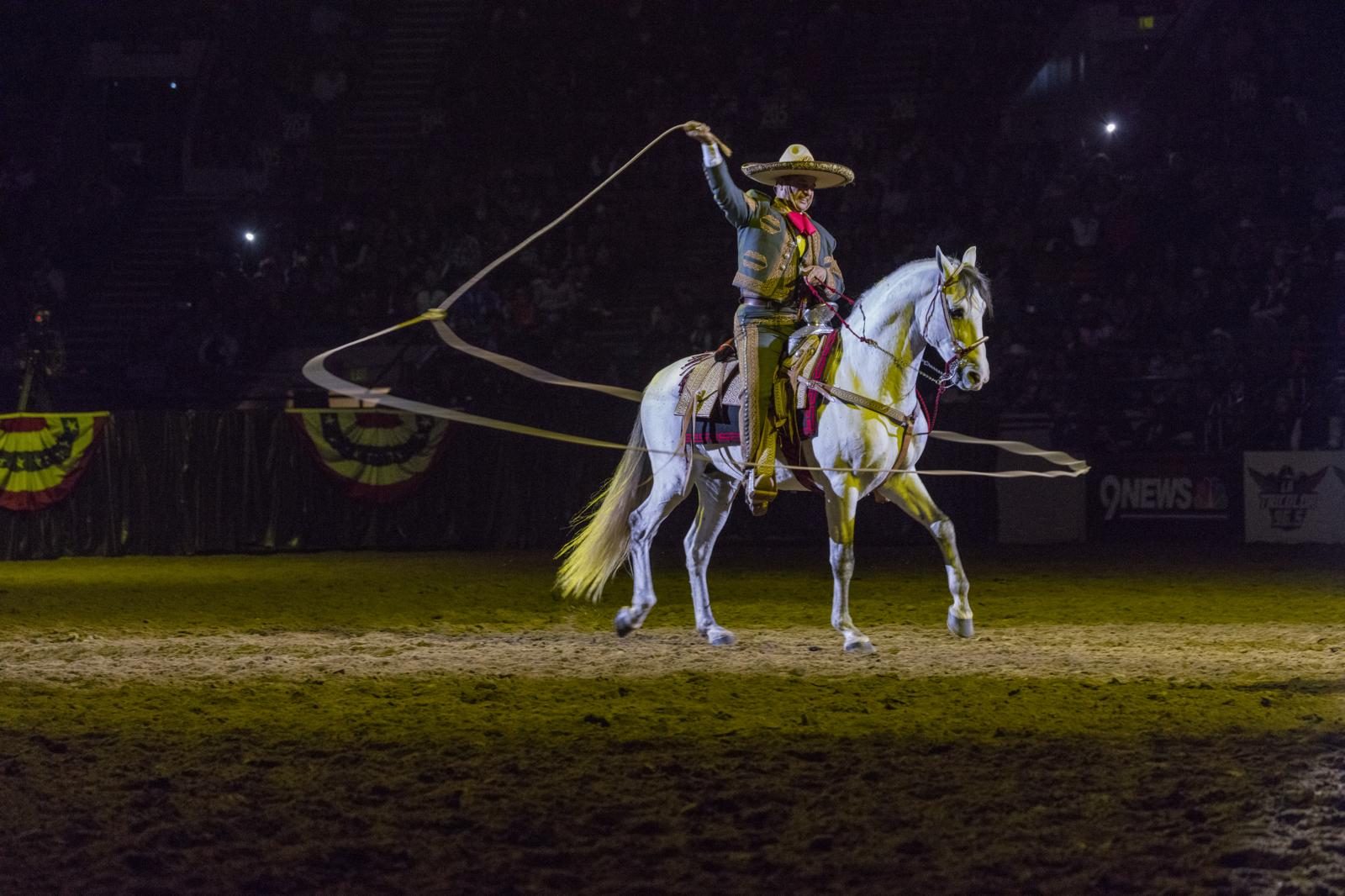
- A charro performs at the Mexican Rodeo Extravaganza, Denver, 2016. Carol M. Highsmith. Library of Congress, LC-DIG-highsm-36866.
The Library of Congress lists all four with no known restrictions on publication.
Sources
The proposals
- Los Angeles Council File 20-1575, City Clerk record of the expired file; Governing, on the June 2026 hearing; NBC Los Angeles, PBS SoCal and the Animal Legal Defense Fund, on the council votes; Last Chance for Animals, August 2026.
- MassLive, via Yahoo, Nov. 18, 2026, on the Worcester vote; WROR, Nov. 11, 2026, on the draft.
- NBC San Diego, Times of San Diego, Jan. 6, 2026 and Voice of San Diego, on San Diego.
- Capital Press, July 27, 2026 and the National Agricultural Law Center, on Oregon Initiative Petition 28.
- PRCA 2024 convention presentation, on the association's 2025 priorities.
- Animal Legal and Historical Center, Michigan State University and the office of Councilmember Bob Blumenfield, on older bans.
California law and records
- California Penal Code 596.7 and Business and Professions Code 4830.8.
- California Veterinary Medical Board staff memo, Jan. 30, 2020, the source of the chart.
- Los Angeles Times review of 21 years of reports, via Everand, and One Green Planet.
- Morgan Hill Times, Aug. 29, 2025, on the Gilroy Rodeo death.
- Animal Legal Defense Fund and Courthouse News, on the Salinas lawsuit.
The Bay Area and Los Angeles
- San Francisco Police Code and the 2000 ordinance.
- CBS News Bay Area, DTN, In Defense of Animals (August 2022 and October 2022), Pleasanton Weekly, the Livermore Rodeo and Drovers, on Alameda County.
- Los Angeles Equine Advisory Committee draft ordinance, April 2022 and its letter to the council.
- ABC7 and the San Fernando Valley Sun, on charros and Councilwoman Monica Rodriguez.
- Cow Palace history and 2026 Grand National schedule.
The San Diego case
- East County Magazine, Feb. 11, 2026, on the ruling; Sandiegoville, on the trial; NBC San Diego, on the Humane Society's findings; Times of San Diego, Jan. 18, 2026.
Welfare and stock
- The Horse, on Dr. Douglas Corey's 2020 presentation.
- PRCA statement in the American Association of Bovine Practitioners proceedings, for the 1993-94 survey, and the National Animal Interest Alliance, for the 2000 survey. Both are industry sources.
- Monterey County Now, on Dr. Peggy Larson; Washington Times, Feb. 21, 2022, on Professional Bull Riders and Last Chance for Animals.
Safety data
- U.S. Parachute Association; U.S. Coast Guard; American Whitewater; Thoroughbred Daily News and Daily Racing Form, on the Equine Injury Database.
History and culture
- Britannica, Rodeo; Oklahoma Historical Society; Richard Slatta, N.C. State.
- UNESCO, Charrería; Bill Pickett Invitational Rodeo.
- Livermore Rodeo history; ProRodeo Hall of Fame on the Grand National and Livermore.
Economics
Commission models
- UC Davis Center for Equine Health, on the racing postmortem program; Ohio Revised Code Chapter 904 and Hobby Farms, on Ohio's board; Kentucky Revised Statutes 257.472; Equine Law Blog, on equine liability statutes.
Ocean View Stables figures are from the stable's own booking system and incident records.
