
The Last Patrol: How American Cities Are Quietly Losing Their Police Horses
No law banned them. Cities from Sacramento to Baltimore have cut their police horses a budget line at a time, while San Francisco swore in three new ones.
On the last day of June, Officer Matthew Jones of the Sacramento Police Department rode a horse named Thor on his usual beat one more time: past the Front Street Animal Shelter, where he stopped so the staff could say goodbye, down to the waterfront and into Old Sacramento. It was, he said, "just like any other day." He grew too emotional to finish describing it to a reporter. The next morning, July 1, the city's mounted unit no longer existed (Sacramento Bee, via AOL).
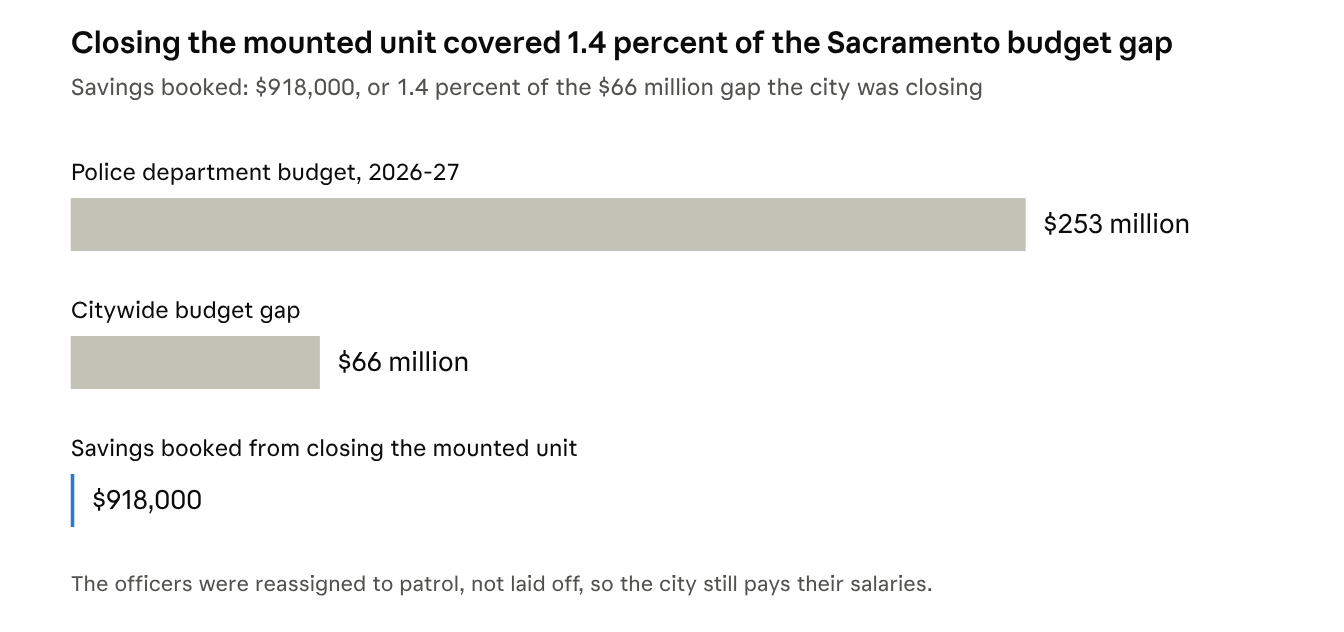
Sacramento was closing a $66 million budget gap. Eliminating the unit's five positions saved $918,000 on paper, according to the city's budget, and the officers who rode were reassigned to patrol cars (Officer.com). The unit had ridden downtown and through Old Sacramento every day since 1998. Its three horses went home with the officers who had bought them.
Two months later, Minneapolis lost its unit more quietly still. The City Council had cut the money for feeding and boarding the horses in 2020 and voted to end the program in 2025. The department kept riding anyway, spending $129,000 without a budget line, until the lease on the barn ran out on Aug. 31. Its 11 horses are boarded west of the city, waiting to be given away (Star Tribune, via Officer.com).
Baltimore's unit, founded in 1888, was written out of the budget that took effect in July 2025, and the city is paying $2 million to get out of its stable lease (Baltimore Banner). Seattle announced the end of its unit in September 2024, citing a shortage of officers (Seattle Police Department), and Baton Rouge closed its unit at the end of that year (Officer.com). Behind them come Lancaster, Pa.; Portland, Ore.; Kansas City, Mo.; Las Vegas; a Massachusetts sheriff's office; and a Texas park ranger program.
No law banned any of these horses, which sets this story apart from the fights over carriages and rodeos earlier in this series. Nobody passed an ordinance. The horses were cut a budget line at a time, and in one city the barn's lease simply ran out. The country had more than 500 mounted police units in the mid-1990s, by one estimate, and has about 150 now (Star Tribune).
About 90 miles from Sacramento, in a bigger and more expensive city, the San Francisco Police Department spent the same spring adding to its string. On March 26 it swore in three new horses, Ozzie, Cinco and Sutro, at its stables in Golden Gate Park (San Francisco Police Department).
This article argues that the cities closing their units are making a mistake and that San Francisco has it right. The savings are mostly an accounting entry, because the officers keep drawing their salaries in another assignment. The best research on mounted policing finds that horses are among the most effective tools a department has for earning public trust. And the patient, soft-handed horsemanship a police horse requires is exactly the temperament a city should want in its officers.
I have a stake in the argument and should state it. I co-own Ocean View Stables in Daly City, Calif., where we take the public on guided beach rides, teach riding lessons and give pony rides. I have never ridden for a police department. I teach natural horsemanship, and the qualities a good police horse and its rider need are the ones my trade lives on.
A century and a half in the saddle
Police rode before they drove. France and Britain had mounted patrols in the 1700s (A-Z Animals). New York put its first officer on a horse in 1858 and formed a mounted unit in 1871; by the department's own account its first job was to stop the reckless galloping of saddle and carriage horses, and many of its early riders were Civil War cavalry veterans (New York University). Boston assigned one mounted officer to the Mill Dam Road in 1873 and bought 27 more horses the next year (When and Where in Boston). San Francisco followed in 1874, and Baltimore in 1888, under a sergeant who had served in the Confederate cavalry (The Equiery).
The automobile should have ended all of it and did not. Cities kept horses for the work a car does badly: parks, beaches, waterfronts, parades and crowded downtown blocks. During the New Deal, the Works Progress Administration built San Francisco's police stables beside the Polo Fields in Golden Gate Park, where the department still keeps its horses (Living New Deal). The U.S. Park Police started its mounted unit in 1934 with a single rented horse and still rides the National Mall, New York's federal parks and the Golden Gate National Recreation Area (National Park Service). Later units were often started with private money: Houston re-formed its unit in 1984 with a grant from downtown businesses, and Minneapolis began its own in 1994 as an 18-month trial paid for by the Downtown Council (Star Tribune, via Officer.com). Sacramento's began in 1998.
Mounted officers have long been called 10-foot cops (University of Oxford Faculty of Law). The name stuck because it describes the advantage exactly: an officer who can see over a crowd and be seen across it.
Where the units stand
| Department | What happened | Status |
|---|---|---|
| Sacramento | Cut from the 2026-27 budget during a $66 million shortfall. Last ride June 30, 2026. | Disbanded after 28 years |
| Minneapolis | Council cut feed and board money in 2020 and voted to end the program in 2025; the department kept riding until the barn lease expired Aug. 31, 2026. | Disbanded; 11 horses awaiting new homes |
| Baltimore | Founded 1888. Council cut $554,000 in 2020; the fiscal 2026 budget defunds it; the city is paying $2 million to exit its stable lease. | Ended |
| Seattle | Ended Sept. 30, 2024, citing a staffing shortage. Expected savings about $230,000 a year. | Disbanded; donated horses offered back to their former owners |
| Baton Rouge, La. | Closed at the end of 2024 to save about $50,000 a year. | Disbanded; horses retired |
| Hampden County Sheriff, Springfield, Mass. | The state cut about $25.5 million from the sheriff's fiscal 2026 budget. Daily patrols of Forest Park and Union Station ended in spring 2026; six of 11 horses were rehomed. | Reduced to part-time |
| Lancaster, Pa. | Founded 1979. Cut Jan. 1, 2024, along with a fire station. Its three Percherons went to the New Jersey State Police. | Disbanded after 44 years |
| Las Vegas Metro | Cut in April 2020 to ease a pandemic shortfall. Officers moved to regular patrol. | Disbanded |
| Kansas City, Mo. | Disbanded Jan. 10, 2020, to move officers to homicide investigations. A foundation has offered to pay for its return. | Disbanded |
| Portland, Ore. | First formed 1875. The 2017-18 budget dropped the unit's roughly $1 million. | Disbanded |
| Waco, Texas, park rangers | Mounted rangers patrolled Cameron Park from the mid-1980s. The last two horses were retired to the lead ranger's care. | Ended after about 40 years |
| Boston | Founded 1873. Cut in 2009. | Disbanded |
| San Diego | Cut in 2010; horses auctioned online. | Disbanded |
| Tulsa, Okla. | Cut in 2009. Relaunched in May 2026 as a part-time unit, with training paid for by the Tulsa Police Foundation. | Revived |
| Broken Arrow, Okla. | City Council approved a part-time unit; teams trained in 2025. | New |
| Philadelphia | Revived in 2011 on a $2 million pledge from the Philadelphia Police Foundation. | Revived |
| Houston | Re-formed 1984. Horses are sponsored through the Houston Police Foundation at $5,000 a year. | Operating |
| Denver | Five horses as of 2024; the last full-time unit in Colorado. | Operating |
| San Francisco | Riding since 1874. Three new horses sworn in on March 26, 2026, after the Golden Gate Park stables were renovated. | Operating and growing |
| U.S. Park Police | Riding since 1934 in Washington, New York and San Francisco. | Operating |
Two things in that table stand out. Every unit that came back did so with private help: a police foundation in Tulsa and Philadelphia, downtown businesses in Houston. And in the coverage of these closures, I found a budget figure for every unit and a performance figure for none. Each decision was made on the cost line alone.
The voices on both sides
The officials who closed these units have reasons, and they state them plainly. In Minneapolis, Council Member Aisha Chughtai summed up the city's position this summer: "The state of our city budget is not great" (KSTP). When council members learned that the department had kept the horses working after the council voted to end the program, Council President Elliott Payne called it an "absolute breakdown in governance." Mayor Jacob Frey, who had called the unit a force multiplier at big events, said it had become clear the votes to keep paying for it were not there (Star Tribune, via Officer.com). Seattle's department said it no longer had enough officers to keep riders in the saddle (Seattle Police Department). Kansas City's chief traded the horses for more homicide investigators (KCUR). In Portland, the mayor promised to spend the unit's savings on unarmed community service officers (Willamette Week).
Critics go further. Some argue that police should not use animals against crowds at all, that a horse of more than half a ton becomes a weapon when it moves into one, and that the horse never chose the job (Current Affairs). In June 2020 a London police horse bolted through a demonstration after its rider struck a traffic light, and a petition asked Parliament to take horses out of protest policing (Yahoo News UK; UK Parliament petition).
The people who rode and ran these units answer with what the horses did. Sacramento's mounted sergeant, Jason Duink, said the biggest loss was not public safety but positive contact with residents, including people who would never talk to an officer in a car. The department's spokeswoman, Officer Allison Smith, said technology and new staffing plans would support patrols, and added that a camera cannot replace a horse (Sacramento Bee, via AOL). In Minneapolis, Council Member LaTrisha Vetaw said she was devastated and called the horses a unique tool, and a sergeant who had ridden full time said officers are far more approachable on horseback than in a squad car. The police federation's spokesman, Kevin Rofidal, said supporters had been told not to solicit donations, since the council would have had to vote to accept the money (Star Tribune, via Officer.com; KSTP).
In Massachusetts, the Hampden County sheriff, Nick Cocchi, ended daily mounted patrols of Springfield's Forest Park after a state budget cut and said of his own decision: "I don't believe it's the right move for public safety" (Western Mass News). In Waco, Lanny French, a park ranger who rode for 24 years, said a mounted ranger is accessible in a way no one in a vehicle can be, because "everybody wants to come and say hello to a horse" (Fox 44).
The departments' own words make the same case. Seattle's announcement acknowledged that a mounted unit "cannot be 'started and stopped'" as budgets rise and fall (Seattle Police Department). Lancaster, Pa., explaining what would replace its three Percherons, promised to explore "utilizing technology, expanding bike patrols, and potentially introducing a therapy dog" (City of Lancaster). Several hundred people had come to Longs Park to see the horses off (One United Lancaster).
The savings are not real
Start with the money, because that is the reason cities give, and it does not hold up. A police horse is cheap. Raleigh, N.C., put the cost of feeding and housing one at about $940 a month in 2010 (Raleigh Public Record). In Fort Lauderdale, Fla., the barn and seven horses cost $45,638 a year, against roughly $400,000 in salaries for the four officers who rode them, by the unit sergeant's estimate; he argued that replacing one horse's work in a crowd would take 25 to 50 officers (New Times Broward-Palm Beach). The horse is a rounding error. The expense is the officer, and the officer is paid the same on a horse or in a car.
Sacramento's numbers show how the accounting works. The city booked $918,000 in savings by eliminating the unit's five positions, about 1.4 percent of the $66 million gap it was closing (Sacramento Bee, via AOL). The officers who rode were not laid off. They were moved to patrol cars, so the city kept paying them and gave up the one assignment where residents meet an officer face to face (Officer.com).
The other cities' figures are smaller still. Seattle expected to save about $230,000 a year out of a police budget of $458 million, five hundredths of 1 percent (Seattle Times). Baton Rouge closed its unit to save about $50,000 a year (Officer.com). Minneapolis's unit typically cost about $225,000 a year (KSTP). Those are real sums to a budget office. They are also smaller than the salaries the cities kept paying the same officers in other assignments, and in the public record I could find, no city set them beside a measure of what its unit did.
Defenders of the cuts say a horse cannot answer a call across town or carry a prisoner. That is true and beside the point. Nobody proposes replacing the patrol fleet with horses. The question is whether a department gets more public safety from its 300th officer in a car or from two officers riding the parks, the waterfront and the downtown blocks where a car cannot go and where nobody talks to the officer inside one. Kansas City at least made a choice about where its officers should work when it moved its riders to homicide cases. Most of the recent closures were simply a line in a budget.
What the research says
The most thorough study of mounted policing was done by the University of Oxford and RAND Europe, which followed British mounted units for 18 months and published its findings in 2014. Mounted officers spent 60 to 70 percent of their time on ordinary neighborhood patrol and only 10 to 20 percent on crowds. On patrol they drew about six times as many casual encounters with the public as officers on foot. In the neighborhoods where the horses were sent, trust and confidence in the police rose, including among residents who had not noticed the police there before. The extra cost came to about £6,550 a year per officer over a comparable specialist post. For that, the researchers concluded, the horses were doing the kind of policing that builds legitimacy, which every other kind of policing depends on (University of Oxford; summary report; Horse Illustrated).
Police have an old saying that one mounted officer is worth 10 on foot. Nobody has measured that. The Oxford findings were measured, and they locate the real value somewhere else: not in force but in approachability. A child will walk up to a horse. A tourist will ask the rider for directions. A resident who would never flag down a patrol car will stop to talk about the neighborhood. Each of those is a contact the department did not have to buy, and the horse made it.
San Francisco never stopped
If a mounted unit cannot survive a modern budget, someone should tell San Francisco. Its police have ridden without interruption since 1874, and the unit is the second oldest in the country, after New York's (San Francisco Police Department). It has had its own budget scare. In 1988, with the city short of money, Mayor Art Agnos suggested trimming the unit's budget. Police supporters put a measure on the ballot to protect it, voters approved it with more than 85 percent of the vote, and the unit has been protected by the city charter since (KQED).
On March 26, during the city's Year of the Horse celebration, the department swore in Ozzie, Cinco and Sutro. They joined Rusty, Bubba, Duke and Gus at the Fred C. Egan Police Stables in Golden Gate Park, which Public Works had just renovated (San Francisco Police Department; San Francisco Public Works). In the same season Sacramento was writing its unit out of the budget, San Francisco was adding to its string.
How the unit stays relevant is no mystery. The department calls its riders and horses "some of our department's best ambassadors," and it uses them that way (SFPD Mounted Patrol). They patrol Union Square, the Embarcadero, the Bayview, the Castro, Japantown, Fisherman's Wharf, McLaren Park and Golden Gate Park, the public places where the city meets its visitors and a patrol car is useless, and they ride in every big parade (Local News Matters). Sgt. Theresa SanGiacomo, who joined the department in 1995 and waited 24 years for a place in the unit, put the horse's value in one line: "It is a barrier breaker to communicate with people" (KQED).
The unit also changed when it had to. The department used its horses for crowd control as recently as the 2003 protests against the Iraq war. After a few incidents in which horses injured people in tight crowds, it stopped (KQED). It did not close the barn; it changed the job. That is the answer the critics of crowd policing deserve, and it is the one San Francisco gave.
The horses are chosen with care. Department policy calls for a horse that is extremely well broke, gentle, sound of mind and fit, a standard the department says rules out more than 99 percent of candidates (SFPD, 2022). Each new horse is tried in every kind of setting the city offers before it is accepted, and the string lives outdoors behind the Polo Fields, coming into the barn only in extreme weather.
The Bay Area's federal parks ride too. U.S. Park Police officers at the Presidio are trained for mounted patrol, and the Golden Gate National Recreation Area has run a mounted patrol since 1976, with 26 volunteers who care for and train its horses (National Park Service; Golden Gate National Recreation Area).
San Francisco is not a small town with cheap land and a sentimental streak. It is one of the most expensive cities in America, with every budget pressure Sacramento, Seattle and Minneapolis have, and its voters decided in 1988 that the horses were worth it. The difference is not money. It is whether the people in charge, and the voters behind them, want the horses.
A horse with a badge
A police horse may be the most carefully chosen working horse in a city. One Nevada mounted officer estimates that only one horse in 10 to 20 has the size and temperament for the job (Boulder City Review). Then the training starts. The U.S. Park Police put new horse-and-rider teams through a 400-hour course and offer it to other agencies (National Park Service; National Parks Traveler). Houston took its entire string barefoot beginning in 2003, and the unit says its horses are sounder for it (Houston Police Mounted Patrol).
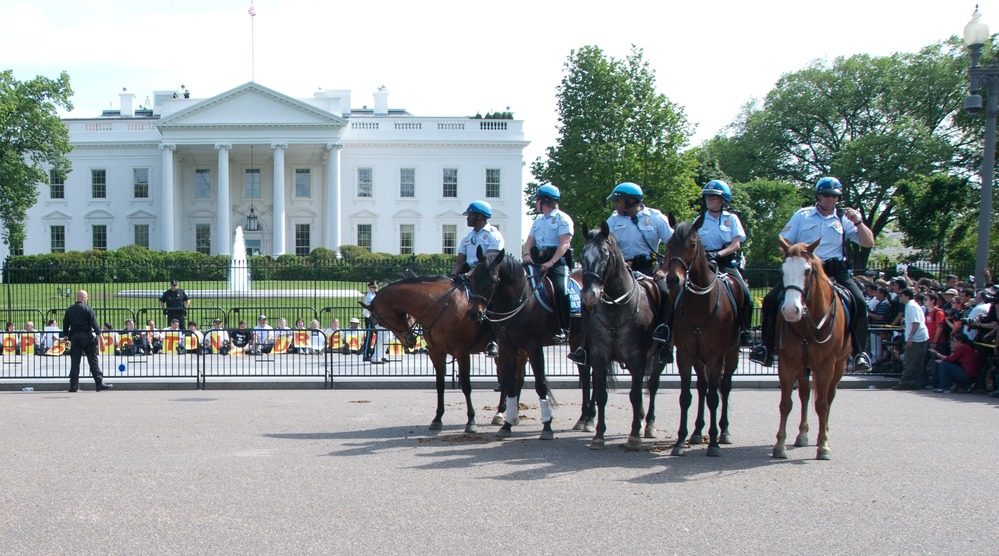
All of that is horsemanship of a high order, and it asks something of the officer that no other assignment does. A police horse has to stand quietly through sirens, flags, fireworks, strollers and strangers' hands, and it gets there the way every reliable horse does: patient exposure, clear signals, soft hands and a rider it trusts. You cannot force a horse into that. The officer who makes one has to be calm, consistent and gentle, and has to stay that way with a thousand people watching. A department that keeps a mounted unit is paying for that temperament and putting it on display in its parks. A department that cuts one is telling the public those qualities were the first thing it could spare.
What happens to the horses when a unit closes depends on whether anyone planned for it. Sacramento's three went home with officers who bought them; Thor will semi-retire among the Jones family's horses and travel with Jones as he goes on training mounted units across the Southwest (Sacramento Bee, via AOL). Seattle offered its donated horses back to their former owners (Seattle Police Department). When Tulsa cut its unit in 2009, a community foundation bought the eight horses and placed them with five nonprofits, where they went on working in therapeutic riding programs (The Horse). Minneapolis's 11 are waiting, their care paid for by the department and a private foundation until they can be given away (Star Tribune, via Officer.com). San Diego auctioned its horses online (USA Today, via Police1).
The good outcomes were earned by people who cared, and they should be the rule. But even the best placement ends something that is hard to get back. The barn goes, then the trainer, then the officers who know how. Tulsa needed 17 years to return. A council that cuts a unit for one year's shortfall is making a decision its successors will pay for over decades.
What counting would look like
The cuts were made on budget figures because budget figures were the only numbers anyone had. A mounted unit should count what it does as carefully as a city counts what it costs: hours on patrol, contacts with the public, searches, events worked, and every injury to a horse, an officer or a bystander, published every year. When Fort Lauderdale's citizen review board questioned whether its unit was worth the money, the unit's sergeant brought it the numbers, and by his account the board went from opposing the unit to supporting it (New Times Broward-Palm Beach).
Counting is not hard, and I can show it with my own business. Our booking system shows that between May 1, 2025, and Nov. 18, 2026, Ocean View Stables put about 8,800 riders on horses: roughly 5,100 on guided beach rides, 3,400 in lessons and 270 on pony rides. In that time we recorded five incidents involving a rider on a guided ride, at least three of them falls, and one in which a visitor who was not riding was kicked. That is about one reported incident for every 1,000 beach riders. We recorded none in lessons. No one died. Our insurer has not paid a claim on any of them, and none has become a lawsuit. Pulling those figures took a morning. A police department already logs every hour its officers work.
The earlier articles in this series proposed a state Large Animal Welfare Commission: a small licensing body, seated with veterinarians, working horsemen, operators, a humane organization and public members, that would take reports from every operator that puts large animals in front of the public, audit them, order a necropsy when an animal dies on the job and publish the rates every year. Police units should file the same reports with it as anyone else. The commission's other job is to be the state's advocate for working horses: finding land and concessions, cutting red tape for operators who meet the standard, and carrying the legislation the trade needs, starting with the equine activity liability statute that 48 states have and California does not (Equine Law Blog). For police barns, that advocate could broker what most cities need and few can arrange alone: a shared stable, trainer and farrier for neighboring departments, a sheriff's office and a park district.
How to keep them
A city that wants to keep its horses through a hard budget year has more choices than fund it or kill it.
- Count what the unit does. Hours on patrol, public contacts, searches, events worked and every injury to a horse, an officer or a bystander, published every year and filed with the state commission where one exists.
- Let the public pay if it wants to. Houston's horses are sponsored at $5,000 a year through its police foundation, and Philadelphia's foundation pledged $2 million to bring its unit back (Houston Police Foundation; Police Magazine). A council is entitled to stop spending tax dollars on horses. It has no good reason to turn away a gift that costs taxpayers nothing.
- Go part-time before going away. Tulsa's revived unit is part-time, turned out for big events and extra downtown patrols (Tulsa Police Department). Minneapolis ran more than 100 rides a season with about 21 part-time riders. A unit that rides 60 days a year keeps the barn, the training and the horses.
- Share the barn. Neighboring departments, a sheriff's office and a park district can split one stable, one trainer and one farrier. Few cities need a string of their own.
- Write the deployment rules down. Patrol, parks, searches, parades and traffic are horse work. Riding into a violent crowd should be a last resort with stated conditions, protective gear for the horse and a review every time a horse is used as force, or, as San Francisco decided, not part of the job at all.
- Hold the horsemanship to a standard. Selection for temperament, a training course on the Park Police model, an equine veterinarian with authority, and limits on hours and heat.
- Plan retirement before the first patrol. A written placement plan for every horse, with first refusal to its rider or donor. No auctions.
- Make closure a decision, not a lapse. If a city wants to end its unit, the council should vote on that question by name, with the unit's numbers in front of it, and the department should abide by the vote. Letting a lease run out is not governing.
The case for the cuts, and the answer to it
Readers should hear the case for the cuts as its defenders make it.
A city with a $66 million hole has to cut something, they say, and a unit whose own sergeant describes its value as community contact rather than crime-fighting is a reasonable place to look. Officers in cars answer 911 calls; horses do not. Private money has costs of its own: when donors pay for a police unit, they gain influence over police priorities, which is one reason a council must approve a gift before a city can accept it. When an elected council defunds a unit and the department keeps it running anyway, as happened in Minneapolis, the problem is bigger than horses. Critics of crowd policing argue that no rulebook makes a half-ton animal safe in a panicked crowd, and animal advocates add that the horse never chose the job. Some will say the goodwill a horse generates is public relations, and that trust in police should be earned by conduct, not borrowed from an animal people like.
Take those in order. The budget argument fails on its own numbers: the officers are reassigned, not cut, so the city keeps paying the salary and loses the horse. The 911 argument answers a proposal nobody made. The donor argument proves too much, since police foundations routinely pay for dogs, equipment and training. The governance argument is a reason to vote on the unit by name and abide by the vote, not a reason to let a lease expire. The crowd argument is a reason for deployment rules, and San Francisco shows that a department can take its horses out of crowd work without taking them off the street. And the last argument has it backward: an officer who can bring a horse to a quiet stand in front of a child is showing conduct, not borrowing it. The one serious study of mounted patrols found that they build the trust police departments say they most need.
There is no version of these closures in which the city comes out ahead. It pays the same officers to do less valuable work, loses the one unit the public approaches on its own, and throws away a barn, a training program and a kind of horsemanship it will need years to rebuild.
The rider and the horse
Matthew Jones did not stop being a horseman when Sacramento stopped paying for horses. Thor went home with him to semi-retire among the family's other horses, and Jones plans to keep training mounted units across the Southwest, with Thor traveling along (Sacramento Bee, via AOL). The skill the city decided it could not afford will go on working, in cities that decided they could.
At the other end of the trip down Interstate 80, the renovated stables in Golden Gate Park hold seven horses on the department's roster, three of them sworn in this year. San Francisco did not get there by having more money than Sacramento. It got there because, when the question came up in 1988, its voters were asked by name whether they wanted the horses, and they said yes.
That is the standard every city should meet. Keep the horses. Count what they do. Let the people who love them help pay. And if a council truly wants them gone, make it say so in a vote, with the numbers on the table.
How this article was reported
This article is based on public records and published reporting: city budget figures and police department announcements in Sacramento, Seattle, San Francisco and elsewhere; council actions in Minneapolis, Baltimore and the other cities named, as reported by local news outlets; the University of Oxford and RAND Europe study of mounted policing; and National Park Service records. Quotations come from public statements, announcements and published interviews, and each is linked to where it appeared. The author did not interview the people quoted. The national count of mounted units is a published estimate, not a census. Ocean View Stables' figures come from the stable's own booking system and incident records.
Image credits
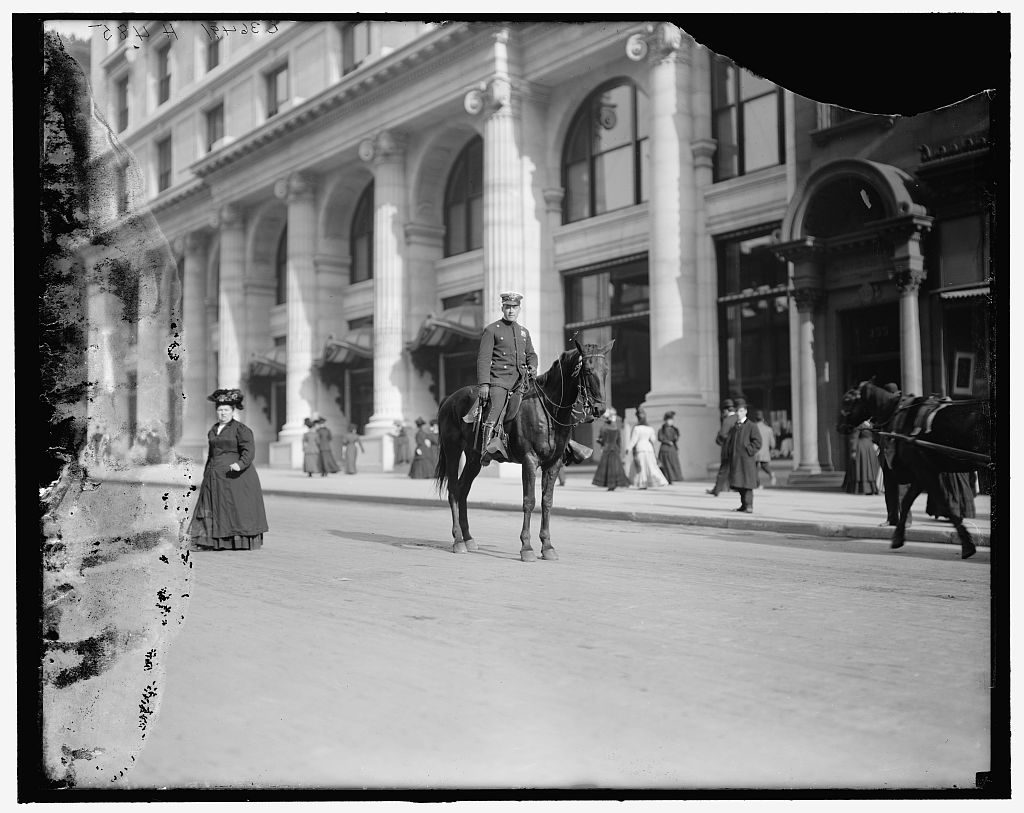
- Mounted policeman, New York, N.Y., about 1900. Detroit Publishing Co. Library of Congress, LC-DIG-det-4a18587. No known restrictions on publication.
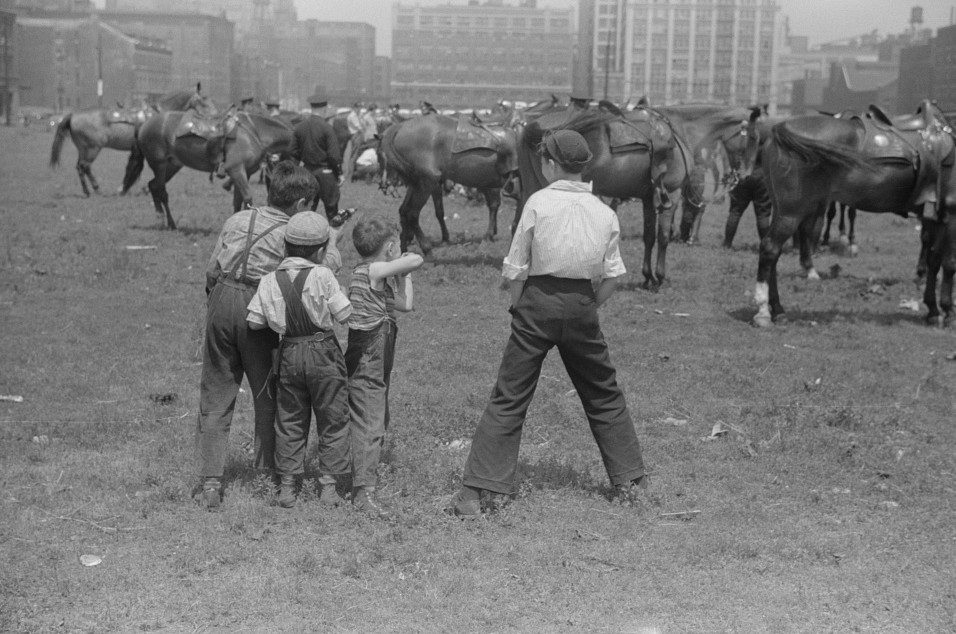
- Boys admiring horses of Chicago, Illinois police department, July 1941. John Vachon, U.S. Farm Security Administration/Office of War Information. Library of Congress, LC-USF33-016162-M4. No known restrictions on publication.
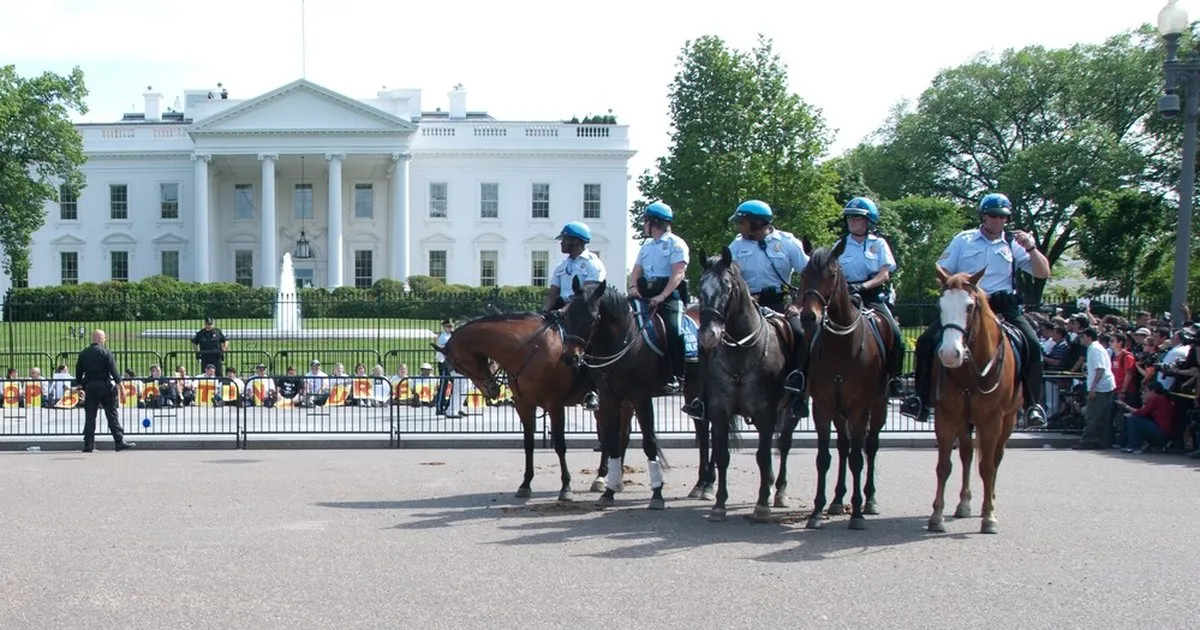
- U.S. Park Police Horse Mounted Unit at the White House sidewalk. National Park Service photo, public domain.
Sources
The closures
- Sacramento Bee, via AOL, July 2, 2026, and Officer.com, July 2, 2026, on Sacramento.
- Star Tribune, via Officer.com, Sept. 21, 2026, and KSTP, July 6, 2026, on Minneapolis; Star Tribune, for the national estimate.
- The Baltimore Banner, Oct. 10, 2025, and The Baltimore Sun, June 2020, on Baltimore.
- The Seattle Times and the Seattle Police Department, Sept. 30, 2024.
- Officer.com, Feb. 3, 2025, on Baton Rouge.
- Western Mass News, March 26, 2026, on Hampden County.
- City of Lancaster, Fox 43 and One United Lancaster, on Lancaster.
- KCUR, Nov. 19, 2019 and KMBC, on Kansas City; Las Vegas Sun, April 13, 2020; OPB and Willamette Week, on Portland.
- Waco Tribune-Herald and Fox 44, on Waco.
- USA Today, via Police1, 2010, on San Diego, Boston and Tulsa.
The revivals and survivors
- Tulsa Police Department, May 21, 2026 and The Horse, on Tulsa; Broken Arrow Sentinel.
- Police Magazine, Feb. 17, 2011, on Philadelphia.
- Houston Police Foundation and Houston Police Mounted Patrol.
- Axios Denver, July 28, 2024.
- National Park Service, Horse Mounted Patrol and National Parks Traveler; Boulder City Review.
San Francisco and the Bay Area
- San Francisco Police Department, March 26, 2026; SFPD Mounted Patrol; SFPD, Dec. 14, 2022; Local News Matters.
- KQED, July 11, 2024, on the 1988 charter vote, the end of crowd duty and the unit at 150.
- San Francisco Public Works, November 2025; Living New Deal, on the stables.
- National Park Service, U.S. Park Police field offices and Golden Gate National Recreation Area, Horse Mounted Patrol.
What the work is worth
- University of Oxford, Nov. 19, 2014, summary report and Horse Illustrated, on the Oxford and RAND Europe study.
- Raleigh Public Record, Dec. 7, 2010, and New Times Broward-Palm Beach, on costs.
The critics
- Current Affairs, "Animals Shouldn't Be Weapons for the Police".
- Yahoo News UK, June 8, 2020, and UK Parliament petition 325156, on London.
History
- A-Z Animals; New York University, on the NYPD unit's founding; When and Where in Boston; The Equiery, on Baltimore; University of Oxford Faculty of Law, on "10 foot tall cops."
The commission
- Equine Law Blog, on equine liability statutes.
Ocean View Stables figures are from the stable's own booking system and incident records.
