
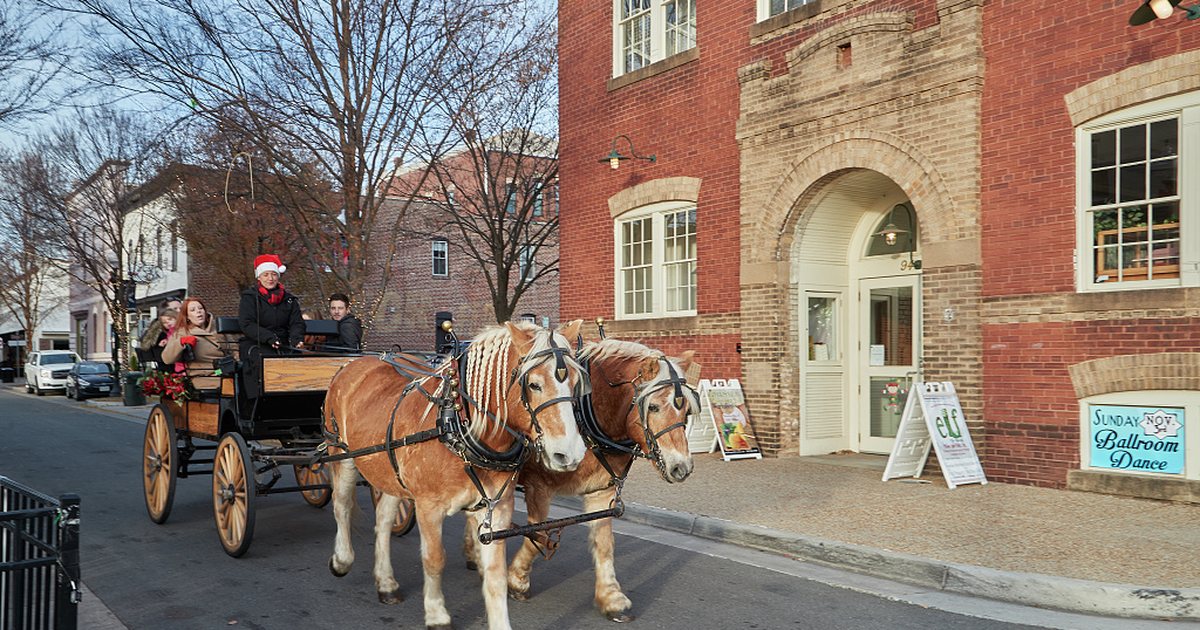
The Last Working Horses: Inside America's Fight Over Carriage Bans
Sacramento pulled its holiday ban. New York signed one. Almost none of the fights over carriage horses turns on a count of rides given and riders hurt.
Every December, the blocks of East Sacramento known as the Fabulous Forties fill with Christmas lights and with the traffic that comes to see them. For decades a family company called Top Hand Ranch has worked those streets with draft horses, Clydesdales among them. The Newborn family founded the ranch in the 1970s and uses about 20 horses trained to share the pavement with cars, according to the Sacramento News & Review.
On a Friday in mid-November, Diana Newborn opened an email from City Hall. The City Council, it said, would take an emergency vote the following Tuesday on barring horse-drawn vehicles from the neighborhood from Nov. 21 through Jan. 2. City staff called the carriages a "unique risk" in holiday traffic and cited one incident the year before, when a startled horse jumped a curb into a yard. Ms. Newborn said the ban could put her out of business (KCRA, Fox 40, CapRadio).
It never came to a vote. By Monday night, after what Councilmember Phil Pluckebaum described as a strong outpouring of community support, the mayor and the city manager pulled the item. "If a horse-drawn carriage is unsafe, it's unsafe everywhere it's used," Mr. Pluckebaum said, and he turned to writing a traffic plan instead (KCRA, Yahoo News). The horses will work this Christmas, though Ms. Newborn told a local reporter she is already nervous about next year (Abridged).
Three days later, New York went the other way. On Thursday morning Mayor Zohran Mamdani signed Romanch's Law, which ends the Central Park carriage trade on June 1, 2028, after nearly 170 years (amNewYork). The drivers' union counts about 180 horses, roughly 150 active drivers and 68 carriage medallions, and it has promised to sue (ABC7, City & State).
Two cities, one week, one question: When a working horse is at the center of a tragedy or a traffic jam, does a city fix the work or abolish the horse? Abolition is winning. Philadelphia banned carriages in June, three years after its last carriage company closed. San Antonio has voted to end its trade by 2030. Activists are pressing city halls from St. Augustine, Fla., to New Orleans. Yet almost none of these fights turns on a count of rides given and riders hurt, because no city, state or national body collects one.
This is the first article in a series on the bans and proposed bans facing working and recreational horses. It draws on council records, testimony, veterinary research and federal safety data, and it argues that bans are the wrong answer: for the horses, for the people who know them best, and for a piece of American life that cannot be rebuilt once the last trained team and the last trained teamster are gone.
I have a stake in the argument and should state it. I co-own Ocean View Stables in Daly City, Calif., where we take the public on guided beach rides, teach riding lessons and give pony rides. Almost every argument made against a carriage horse can be made against a lesson horse or a trail horse, and some already are.
A country built behind a horse
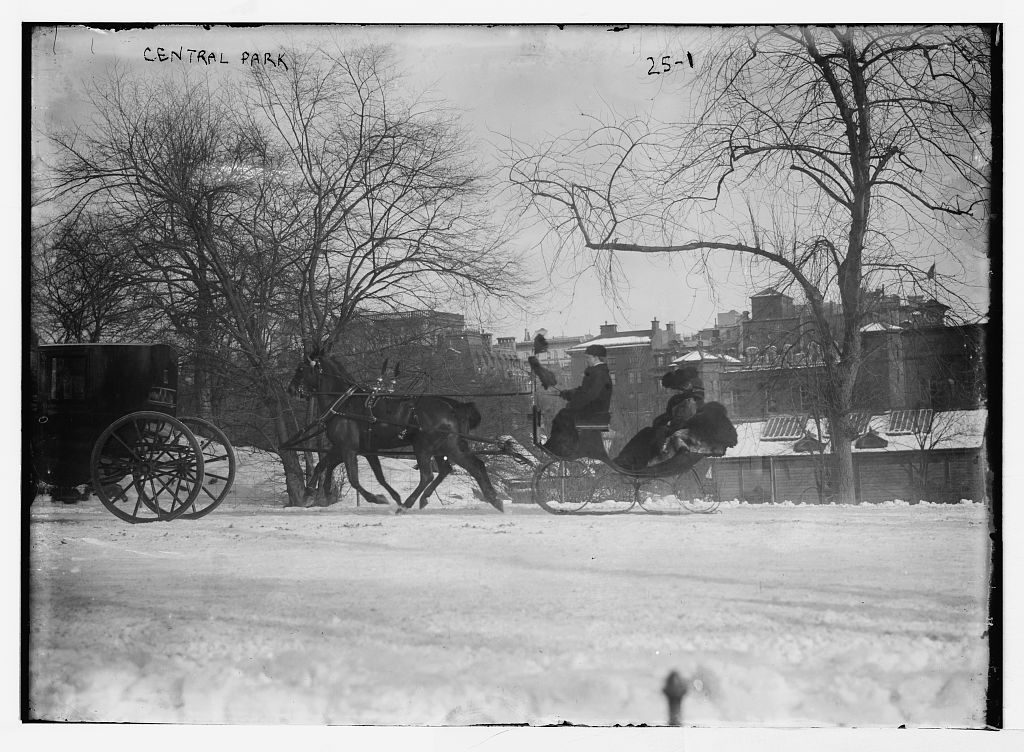
The United States moved by horse for most of its history. Conestoga wagons hauled freight over the Alleghenies; Concord coaches, built in New Hampshire from the 1820s, carried mail and passengers across the West. By the 1840s American cities ran on horse-drawn omnibuses, street railways and delivery wagons, and as late as 1900 Manhattan alone held about 130,000 horses, Chicago 74,000 and Philadelphia 51,000 (The Henry Ford).
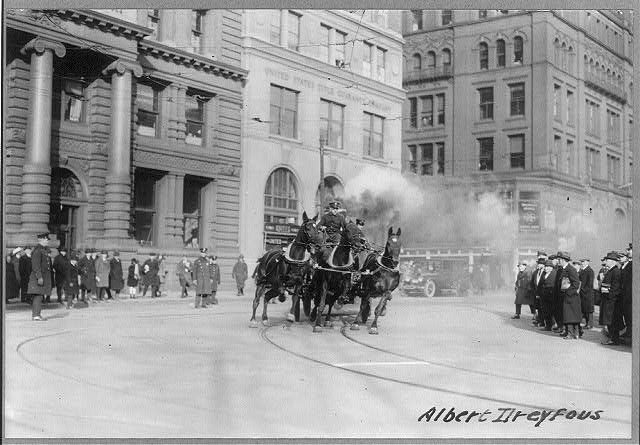
San Francisco was no exception. The city answered its first fire alarm with horse-drawn apparatus on Oct. 14, 1863, and its fire horses learned to step under a hanging harness at the sound of the bell (San Francisco Fire Department Museum). In 1913 Mayor James Rolph Jr., in a conductor's cap, helped drive the city's last horsecars to the barn (Museum of the City of San Francisco). Los Angeles retired its last fire horses to Griffith Park in July 1921. Brooklyn's Engine 205 made the last horse-drawn fire run in New York in 1922, and Washington held a ceremonial last run in 1925 that it still re-enacts (LAFD, The Hatching Cat, WTOP).
Nobody should romanticize that era. In 1900, horses and horse-drawn vehicles killed 200 people in New York City, and the streets were deep in manure (Access magazine). By 1912 cars outnumbered horses in New York, and the last horsecar there was gone by 1917 (99% Invisible). The horse lost the city because something better came along, and that was progress.
What survives is small, licensed and visible: about 180 horses in New York; 25 permits in San Antonio, where the city has licensed carriages since 1865 (KSAT); one family company in Sacramento. These are the last places where an ordinary American child can stand beside a draft horse in harness and see what moved the country. They are living history in the same sense as a working blacksmith's forge or a tall ship under sail, and the question now is whether to keep them and run them well or to let them go.
Where the bans stand
New York is the largest city to act, but it is not the first, and the list of cities under pressure is longer than the list of cities that have already banned.
| Place | What happened | Status |
|---|---|---|
| New York City | Council passed Romanch's Law 40 to 7, with two abstentions, on Oct. 22, 2026; the mayor signed it Nov. 19 (City & State, amNewYork) | Carriages end June 1, 2028; union lawsuit promised |
| Sacramento | Emergency holiday-season ban proposed for the Fab 40s (KCRA) | Pulled Nov. 16, 2026; traffic plan in the works |
| San Francisco | PETA asked Mayor Gavin Newsom to ban carriages after a horse bolted along the Embarcadero in June 2009; his office dismissed the idea (NBC Bay Area, SFist) | Permit rules since 1999; no ban |
| Philadelphia | Council banned commercial and noncommercial carriages on June 11, 2026, though the last company closed in 2023 (Inquirer) | Banned |
| San Antonio | Council voted 10 to 0 in December 2024 (Texas Public Radio) | Hours shrink from 2027; ends Jan. 1, 2030 |
| Chicago | Council voted in April 2020 not to renew licenses (CBS Chicago) | Ended Jan. 1, 2021 |
| Salt Lake City; Las Vegas; Asheville, N.C.; Biloxi, Miss.; Camden, N.J.; Key West, Palm Beach, Pompano Beach and Treasure Island, Fla. | Listed as banned in advocacy-group tallies (One Green Planet, PETA) | Banned |
| Savannah, Ga. | Council voted in August 2025 to halt tours at 85 degrees, down from 95; an operator warned it could end the trade (Atlanta Journal-Constitution) | Restricted |
| Dallas | Council committee formally proposed a ban in April 2024 (Partnership to Ban Horse Carriages Worldwide) | Proposed |
| Atlanta; Cape May, N.J.; Cincinnati; Memphis; Pittsburgh | Bans proposed, according to Humane World for Animals (Humane World) | Proposed |
| St. Augustine, Fla. | Activists pressed the City Commission in September 2026 to phase out horses (Citizen Portal) | Campaign active |
| New Orleans | Mules only since 1980; speakers urged a full phase-out at City Hall in 2026 (Citizen Portal) | Campaign active |
| Charleston, S.C.; Boston; Nashville | Petitions and calls for bans after New York's vote; a Charleston official said he does not expect one soon (USA Today via Yahoo) | Still operating |
| Abroad | Montreal (2020), Brussels (2024) and Málaga (2025) have ended carriage rides (PETA) | Banned |
Humane World counts carriages still operating in at least 27 other American cities. One campaign group keeps a running list of petitions that also names Charlotte, Cleveland, Indianapolis, Kansas City, Lexington and Milwaukee (petition list). The tallies of older bans come from advocacy organizations and were not checked city by city for this article.
The bans also tend to grow once they start. Philadelphia's last carriage company closed in 2023, and in June the City Council banned carriages anyway, widening the bill at the last minute to cover noncommercial driving as well (Inquirer). The sponsor worried that the nation's 250th birthday might tempt someone to bring horses back, so the bill reached sleighs and wagons too (KYW Newsradio). A measure sold as worker and animal protection ended as a rule against hitching a horse in the city where the Declaration of Independence was signed. The campaigns do not stop at carriages, either. PETA has asked the International Olympic Committee to drop every equestrian event from the Games (PETA letter), and each of those fights gets its own article in this series.
The voices on both sides
The campaign against New York's carriages is nearly two decades old. Council Member Tony Avella introduced the first bill to end the trade in 2007; years later, Council Member Robert Holden's Ryder's Law sought to replace the horses with electric carriages (New York City Council). Neither passed. What changed in 2026 was a death. Romanch Mahajan, 18, was visiting from India with his family to celebrate his high school graduation when he was thrown from a runaway carriage in Central Park in June (ABC7). Just over a week earlier, a carriage horse had eaten a poisonous plant, collapsed in the park and died (ABC7 Los Angeles). At a nine-hour hearing in July, the teenager's aunt and uncle told the Council that their nephew would be alive if an earlier ban had passed (West Side Spirit).
The ban's supporters describe their vote as long overdue. Council Member Christopher Marte, the bill's prime sponsor, said New Yorkers were ready to move past an outdated tradition, and Speaker Julie Menin called the law a commitment to animal welfare, public safety and worker protection (City & State, TNND). Edita Birnkrant, executive director of NYCLASS, which has fought the trade since the 2000s, called the vote "a historic victory for horses, workers, and everyone who deserves safe streets" (New York City Council). In 2025 the Central Park Conservancy, which manages the park for the city, called for a ban for the first time, describing it as "a matter of public health and safety for Park visitors" (CBS New York). "This is 2026, not 1896," said Brian Shapiro, New York director of Humane World for Animals (Humane World). The ASPCA argues that experience has shown regulation cannot overcome the basic difficulty of running carriages in a modern city (ASPCA).
The drivers tell a different story, mostly about what comes next. Christina Hansen, a driver and spokeswoman for the carriage workers, told the Council at the July hearing, "Workforce development is a lovely word, but I don't know what it is" (West Side Spirit). Alexus Lawson, 28, grew up with horses and has worked as a riding instructor. "Without a job, how can I take care of my horses?" she asked (TNND). Medet Fidan, 56, a former cabdriver who took up the reins after ride-hailing apps upended the taxi business, put it plainly: "I think the city is leaving us a big mess" (The Associated Press).
The law asks the city to weigh compensation for medallions and businesses but does not require it, and John Samuelsen, international president of the Transport Workers Union, which represents the drivers, was blunt about the transition plan: "There's no guarantees, there are supposals" (City & State). After the June death, owners argued that many accidents could be prevented with something as simple as hitching posts throughout the park, so drivers could tie off and secure a horse (ABC13).
The veterinarians, for their part, have never concluded that horses cannot work in cities. The American Association of Equine Practitioners says equids in urban settings can adapt to their surroundings, and it sets conditions: water, shelter from weather, and at least an annual examination by an equine veterinarian who knows local conditions (AAEP). When a former president of the association and a team of welfare experts toured five New York carriage stables, they reported no undernourished horses, no lameness and the demeanor of contented animals (AVMA). New York's horses already work under capped daily hours, a mandatory five-week furlough outside the city each year and regular veterinary visits (West Side Rag).
What is counted, and what is not
Read the New York debate closely and one thing is missing: a rate. Humane World's own review of the city's oversight found that agencies could not reliably connect which horse was working with which carriage, driver or owner, or for how long (Humane World). That is an indictment of record-keeping, not of horses, and a microchip scanner and a shared database would answer it.
Compare the risks Americans accept, and notice that each comes with a count. The Coast Guard builds an annual report from accident reports covering every boating death, disappearance, injury needing more than first aid and significant damage (IIMS summary of the 2024 report). Over half a century, that count has tracked one of the quietest safety successes in American life.
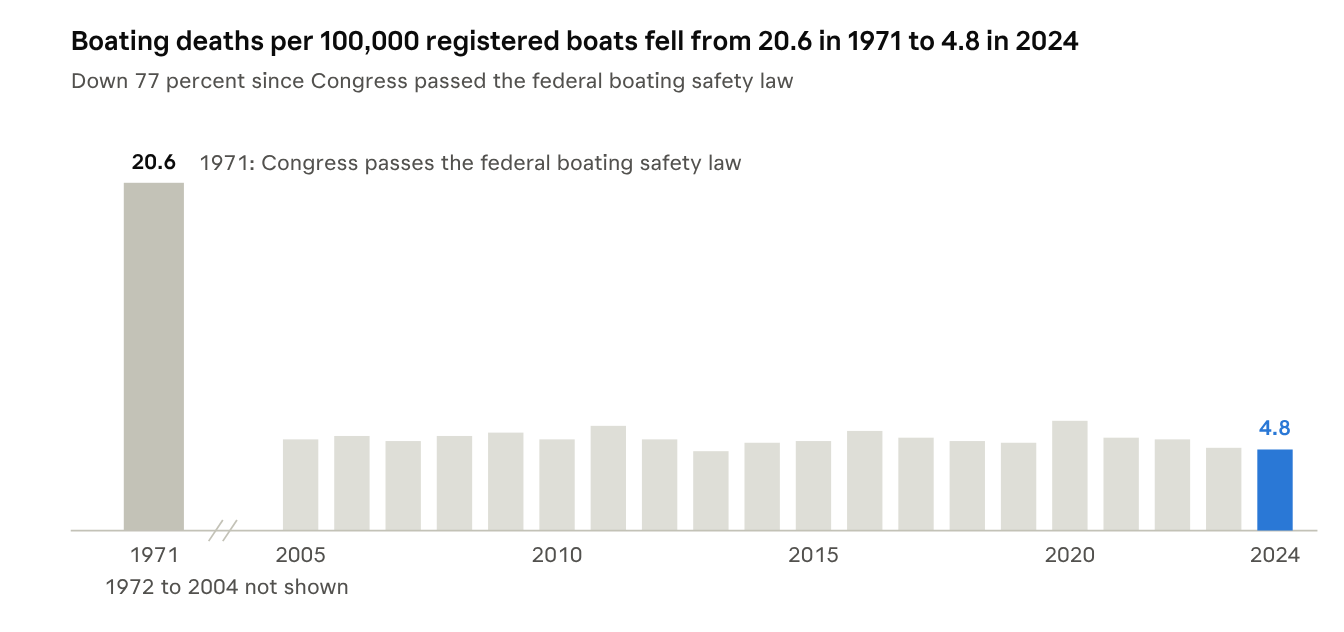
The decline did not come from banning boats. It came from instruction, equipment standards, inspection and enforcement, written from what the reports showed. Skydiving's national association publishes deaths per jump: 16 in 2025, across roughly 3.47 million jumps (U.S. Parachute Association). Thoroughbred racing set up a national Equine Injury Database in 2009, when it recorded 2.00 racing deaths per 1,000 starts. In 2025 the figure was 1.07, the lowest it has recorded, and the tracks that publish their own numbers posted 0.95 against 1.14 at tracks that keep them private (Thoroughbred Daily News, Daily Racing Form).
Nobody can state a rate for carriage rides, guided trail rides or riding lessons, and not because the numbers are unknowable. A modern stable runs on booking software. Its operator knows how many rides went out last week and last year, and keeps an incident report for every fall, spook and near miss, with a note on what changed afterward. What is missing is anywhere to send it. So the public argument runs on anecdote: one collapse, one runaway, one video. A ban decided that way is a decision made without the data, when the data could be had for the asking.
California's choice
California has had this argument before, and for a long time it chose rules over bans.
In 1999 a San Francisco supervisor named Gavin Newsom carried an overhaul of the city's law on horse-drawn vehicles. It required a business permit and a driver's permit from the police chief, a training certificate for every driver and a veterinary examination of every horse every six months, with the reports sent to the police and to Animal Care and Control. Horses had to weigh more than 1,100 pounds and could work no more than six hours a day and five days a week, with water and 15 minutes of rest every hour. A whip could be used only to control a horse, never to hurt one (San Francisco Ordinance 284-99). A companion measure, also his, required carriage owners to make reasonable efforts to place retired horses in humane homes, through adoptions or agreements with sanctuaries (Ordinance 285-99). Mayor Willie L. Brown Jr. approved the rules.
A decade later, a carriage horse being readied for work at Pier 45 spooked and ran down the Embarcadero and through North Beach, sending its handler to the hospital and knocking at least two people off bicycles (San Francisco Examiner, via All-Creatures). PETA asked Mayor Newsom and the Board of Supervisors to ban carriages (NBC Bay Area). His spokesman, Nathan Ballard, answered with a joke: "Next they'll be asking us to ban cobblestones, monocles, hoop skirts" (SFist). The city did not ban carriages.
Ten years after that, as governor, Mr. Newsom signed SB 469, which let the California Horse Racing Board suspend a track's license on the spot after 30 horses died at Santa Anita (Fox LA). Over 20 years, one California politician wrote rules for carriage horses, declined to ban them and gave a state board real power over racehorses. That is closer to a coherent policy than anything the state has now.
Because now there is none. California has no equine activity liability statute, though 48 states do (Equine Law Blog), and no state agency counts the rides or injuries of carriage, trail or lesson horses. Each city decides alone, often against a deadline, as Sacramento nearly did. The pressure is not confined to carriages. Los Angeles spent two and a half years drafting a rodeo ban before the file expired in July, and advocates want it reintroduced (Westside Current). The Griffith Park pony rides closed in December 2022 after a campaign to end them (ABC7 Los Angeles). Sacramento's own mounted police unit rode its last patrol on June 30, a casualty of the budget (Officer.com).
Sacramento, to its credit, noticed the flaw in its own reasoning this month. The stated problem in the Fab 40s was traffic, and a traffic problem calls for a traffic plan. That is what the city is now writing.
The strongest case for a ban, and its limits
An honest defense of the carriage trade has to begin with the people and horses who were hurt. Romanch Mahajan is dead. The horse that collapsed in Central Park in June is dead. In Charleston in August, a horse frightened by a truck threw two passengers, who were taken to a hospital (Post and Courier). The critics are right that a horse is a prey animal that can bolt, and that a city street gives it plenty to bolt from.
They are right, too, about a gap in the science. A veterinary review of carriage work found little specific data on how these horses handle heat and humidity, and concluded that the profession does not actually know (dvm360). That argues for funding the research and writing temperature rules from it. It does not argue for ending the work before anyone has measured it.
What the critics leave out is that reform was on the table. In 2022 the drivers' union published a platform asking for stronger city oversight, more driver training, more heat protection and a stable inside Central Park, so horses would never cross Midtown traffic (Gothamist). The city built none of it. Four years later it chose prohibition.
Ban supporters reply that regulation was tried for decades and a passenger still died. Apply that test to the rest of American outdoor life and very little survives it. The Coast Guard counted 556 deaths in recreational boating in 2024, the fewest in more than 50 years of record-keeping (U.S. Coast Guard). American Whitewater receives reports of 30 to 40 deaths on moving water in a typical year, some of them on commercial raft trips with licensed guides (American Whitewater). No one answers those deaths by outlawing sailboats or rafts. Regulation that is funded and enforced lowers risk. It has never been asked to reach zero anywhere else.
We accept that bargain because these things are worth doing. Some risk is the price of a life lived in contact with wind, water and animals, and adults are trusted to pay it. Riding behind a horse is among the oldest of those experiences, far older than the parachute. There is one difference, and it should be said plainly: the passenger chooses and the horse does not. That is the reason for a welfare standard strict enough to protect the animal, the same reason we hold the handlers of working dogs to one. No one calls a police dog or a guide dog a victim. We call them partners, and we regulate their handlers rather than retire the breed.
Then ask what a ban does to the horses. Under Romanch's Law, owners may keep their horses but may not sell them to another carriage business or to a slaughterhouse (City & State). The slaughter rule is right. The transfer rule means a trained, sound driving horse may not go on doing the one job it knows (Insurance Journal). Before the vote, a local news site noted that where the horses would go and who would pay for their care remained unsettled (W42ST, via Equine Advocates). Humane groups have offered placement help, and they deserve credit for it. But sanctuary space is finite, and a horse can live 30 years.
The national arithmetic is unforgiving. San Antonio's own figures put the yearly cost of operating a horse-drawn carriage at about $15,000 (San Antonio Report). A horse that earns its keep gets fed, shod and seen by a veterinarian; take away the work and someone must pay that bill indefinitely. The American Horse Council counted 9.2 million horses in the United States in 2005, 7.2 million in 2017 and about 6.6 million in 2023 (USEF, AHC, FTBOA). In 2025, at least 24,000 American horses were trucked to slaughterhouses in Mexico and Canada, up about 21 percent in a year (Return to Freedom). No ordinance sends a horse to a kill pen. But every job a horse loses is one less reason for someone to breed, train, buy and keep one.
What counting would look like
I can state such a rate for my own business, because the numbers are already there. Our booking system shows that between May 1, 2025, and Nov. 18, 2026, Ocean View Stables put about 8,800 riders on horses: roughly 5,100 on guided beach rides, 3,400 in lessons and 270 on pony rides. In that time we recorded five incidents involving a rider on a guided ride, at least three of them falls, and one in which a visitor who was not riding was kicked. That is about one reported incident for every 1,000 beach riders. We recorded none in lessons. No one died. Our insurer has not paid a claim on any of them, and none has become a lawsuit.
I do not offer those figures as proof that riding is safe. I offer them to show that the numbers exist and that an operator can produce them in a morning. A public registry with one standard form would collect the same figures from every stable, ours included, and let a city judge operators on evidence instead of on the last video it saw.
Who would keep that registry? I propose a state Large Animal Welfare Commission: a small licensing body, seated with veterinarians, working horsemen, operators, a humane organization and public members, covering carriage companies, rental strings, rodeos and any other business that puts large animals in front of the public. It would take the reports, audit them, order a necropsy when an animal dies on the job, publish the rates every year and write the standards from what the numbers show. California already does this for racehorses: since 1990 its Horse Racing Board has sent every horse that dies at a track to the state laboratory at UC Davis (UC Davis). Ohio has had a Livestock Care Standards Board, with power to set penalties, since 2009 (Ohio Revised Code).
Regulation is only half of what I have in mind for it. The same body should be the state's advocate for working horses: finding the land and the concessions where the public can still meet one, cutting the red tape for operators who meet the standard, and carrying the legislation, starting with the equine liability statute that 48 states have and California does not. The second article in this series, on rodeo, sets out the regulatory half; the fourth, on public riding, sets out the rest.
Critics will say a board with industry seats goes easy on the industry, and cities will not welcome a state license that limits what they can ban. Both objections are fair. Both are answered better by collecting the numbers and publishing them than by leaving them in each operator's filing cabinet.
The best model for what to do when horse care fails comes from the Army. In May 2023 it suspended the horse-drawn caissons that carry the fallen at Arlington National Cemetery, after two horses died and an investigation found poor living conditions, poor feed and too little open space. The Army did not conclude that horses have no place at Arlington. It rebuilt the stables, brought in outside equine experts, retrained its soldiers and returned the caissons to service on June 2, 2025 (MOAA, Military.com). The failure was in the horsemanship. So was the fix.
Regulate the horseman, keep the horse
Good horsemanship is the best safety equipment a city can buy. Natural horsemanship, the approach built on how horses actually learn (pressure and release, timing, feel, and patient exposure to the things that frighten them), produces a horse that thinks before it bolts. A carriage horse that spooks at a truck is partly a traffic problem. It is also a selection and training problem, and training problems have known solutions.
The alternative to a ban is a standard strict enough that bad operators cannot meet it and good ones are proud to. A city that wants to keep its horses and protect them could adopt the following.
- License the horseman, not just the vehicle. Require demonstrated skill in driving, horse behavior and emergency handling, with a supervised apprenticeship before a driver works alone. New York already requires an 80-hour course (amNewYork); make the practical test the heart of it.
- Certify the horse. Screen for age, soundness and temperament. Require documented, progressive training for traffic, crowds and noise before a horse carries the public.
- Put an equine veterinarian in charge of fitness. Follow the AAEP standard, with San Francisco's six-month examinations as the floor, and give the veterinarian authority to pull a horse from work.
- Track every horse, every shift. Microchip each animal and log hours, routes, driver and rest days in a record the city can audit. This answers the central failure the New York oversight report identified.
- Report the numbers. As a condition of working in public space, every operator files its figures with the state commission each quarter: rides given, horses worked and every incident, from falls and runaways to collisions and veterinary calls. The commission publishes the rates and studies the patterns, and the next rule is written from that evidence.
- Design the route. Keep carriages out of heavy traffic, stable horses beside the place they work and put hitching posts where drivers load and wait. For seasonal events like the Fab 40s lights, set carriage hours, lanes and loading points in the traffic plan.
- Write weather rules from evidence. Fund the heat and humidity research veterinarians say is missing, and set limits from the results.
- Fund retirement up front. A small per-ride fee, held in trust, pays for each horse's retirement, and placement follows San Francisco's 1999 rule of adoptions and sanctuary agreements. Keep the ban on sale for slaughter.
- Enforce, and mean it. Suspend and revoke licenses. Philadelphia shut down a carriage company in 2017 by court injunction over building violations and abuse claims (Inquirer). That is what closing a bad operator looks like, and it required no ban.
- Open the door to good operators. Where a city has a standard, it should issue permits to the trainers and outfits that meet it, and build apprenticeships that bring young people and veterans into the trade. More horsemanship, and more good jobs for horses, is the goal.
Under the lights
At the signing in New York, the mayor said carriages had been a fixture of Central Park for 150 years and that the city was closing the chapter (ABC7). Closing a chapter is easy. A team of horses that will stand quietly in traffic while a child reaches up to touch a nose takes years to make, and the people who know how to make one are not being replaced.
Sacramento shows that another ending is available. Neighbors spoke up, the city listened, and it went to work on the actual problem. This season the Newborns' horses will be out under the lights in the Fabulous Forties, as they have been for years. Every city weighing a ban should go and watch them first.
How this article was reported
This article is based on public records and published reporting: New York City Council legislation, hearing coverage and statements; Sacramento City Council materials and local news coverage; San Francisco's 1999 ordinances; veterinary position statements and research; federal safety statistics; and court, budget and news records from the other cities named. Quotations come from public statements, hearings and published interviews, and each is linked to where it appeared. The author did not interview the people quoted. Lists of older bans come from advocacy groups and are labeled that way. Ocean View Stables' figures come from the stable's own booking system and incident records.
Image credits
- Horse-drawn carriages in Central Park, New York City, about 1900. Bain News Service. Library of Congress, LC-DIG-ggbain-00138.
- "The last of the Horses," Engine Co. 205, New York Fire Department, 1922. Library of Congress, LC-USZ62-63811.
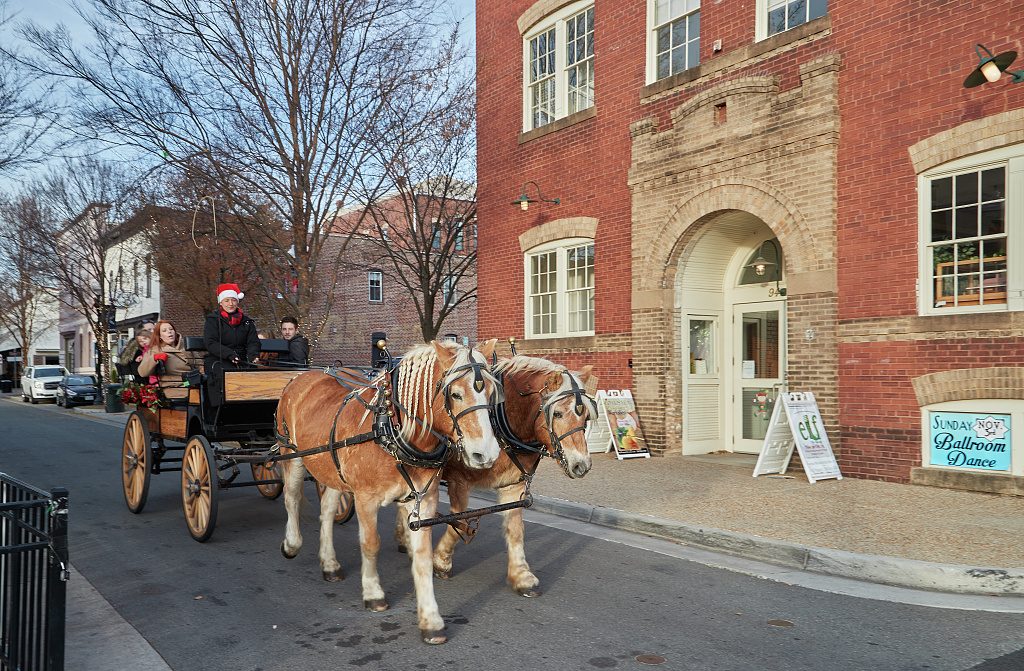
- A holiday horse-drawn carriage ride in Old Town Manassas, Va., 2019. Carol M. Highsmith. Library of Congress, LC-DIG-highsm-61869.
The Library of Congress lists no known restrictions on publication for these images.
Sources
New York
- New York City Council, City & State, amNewYork and ABC7, on Romanch's Law, the vote and the signing; ABC7, at the signing.
- TNND, The Associated Press and West Side Spirit, on the drivers and the July hearing.
- ABC7 Los Angeles and ABC13, on the June deaths and the owners' proposals; CBS New York, on the Central Park Conservancy.
- Insurance Journal and W42ST, via Equine Advocates, on the horses after the ban; Gothamist, on the union's 2022 platform; West Side Rag and amNewYork, on existing rules.
California
- Sacramento News & Review, KCRA, KCRA, Fox 40, CapRadio, Yahoo News and Abridged, on Sacramento.
- San Francisco Ordinance 284-99 and Ordinance 285-99; San Francisco Examiner, via All-Creatures, NBC Bay Area and SFist, on 2009; Fox LA, on SB 469.
- Equine Law Blog, on liability statutes; Westside Current, ABC7 Los Angeles and Officer.com, on other California fights.
Other cities
- Philadelphia Inquirer, Inquirer, on the 2017 injunction and KYW Newsradio, on Philadelphia.
- Texas Public Radio, KSAT and San Antonio Report, on San Antonio; CBS Chicago; Atlanta Journal-Constitution; Post and Courier; USA Today via Yahoo.
- Citizen Portal, St. Augustine and Citizen Portal, New Orleans.
- Advocacy tallies: Humane World for Animals, PETA, One Green Planet, Partnership to Ban Horse Carriages Worldwide and its petition list; PETA letter to the I.O.C..
Veterinary, welfare and oversight
- AAEP, AVMA, dvm360 and ASPCA.
- UC Davis, on California's necropsy program; Ohio Revised Code, Chapter 904.
Safety data
- U.S. Coast Guard, 2024 Recreational Boating Statistics, Coast Guard release and IIMS summary, the source of the chart.
- U.S. Parachute Association; American Whitewater; Thoroughbred Daily News and Daily Racing Form, on the Equine Injury Database.
History and the horse economy
- The Henry Ford, Access magazine, 99% Invisible, San Francisco Fire Department Museum, Museum of the City of San Francisco, LAFD, The Hatching Cat and WTOP.
- MOAA and Military.com, on the Arlington caissons.
- USEF, American Horse Council and FTBOA, on the horse population; Return to Freedom, on slaughter exports.
Ocean View Stables figures are from the stable's own booking system and incident records.
